Last updated November 17, 2026
ADU Builders Warning Signs Every Homeowner Should Know
The contractor who makes you feel bad for asking about their license is not the rare exception. The Nevada State Contractors Board logged over 400 complaints against unlicensed or improperly licensed residential builders in a recent 24-month period. Most of those homeowners didn’t ignore a flashing red light. They brushed past a small, awkward moment because the contractor seemed friendly and the price sounded good. This guide names the quiet warning signs that matter more than the obvious ones – the ones you’ll see in Summerlin before a single foundation is poured.
Quick Answer
The biggest ADU contractor red flags are a verbal price that keeps shifting before you’ve signed, a crew you can’t identify or verify as vetted employees, and a contractor who offers to let you pull your own permit. These quiet signs matter more than a high written quote. A homeowner who asks hard questions up front avoids the $40,000 stuck-in-the-middle scenario later.
Table of Contents
- Why a Drifting Verbal Price Is Worse Than a High Written Quote
- The Crew-Identification Problem: Who Is Actually on Your Property?
- What Nevada C-3 and B-2 License Verification Actually Looks Like
- Reading the “Unforeseen Conditions” Clause in Your Contract
- The Permit-Pull Test: A Simple Disqualifier
- Summerlin-Specific Warnings: Climate, HOA, and Code
- The Green Flags That Should Accompany a Real Estimate
- Questions to Ask Before You Sign Anything
Why a Drifting Verbal Price Is Worse Than a High Written Quote
A high written quote is honest. A low verbal number that grows with every conversation is a trap disguised as a bargain. If you’ve talked to a contractor three times and the figure has moved from $190,000 to $215,000 to “somewhere around $230,000, but don’t hold me to it” – and you haven’t signed a single document – that’s a structured warning sign.
Here’s what’s usually happening. The verbal number is a hook designed to keep you engaged. Once you’ve invested time, fallen in love with a floor plan, and told your family about the plan, switching contractors feels costly. That’s when the real price appears – with no written baseline to compare against.
Ask for the number in writing. Every time. A contractor who hesitates to put a figure on paper is telling you something.
- Written price means accountability. A locked number creates a boundary. If it’s not written, it’s not binding, and scope creep costs land silently on your bill.
- Small “adjustments” add up. A $6,000 jump at the framing stage and another at electrical can turn a $190,000 project into $240,000 before you notice.
- Legitimate cost changes get documented. Real contractors handle actual surprises with written change orders you approve in advance – not with vague verbal hedges.
In our experience working Summerlin lots, a written price before work begins is the single clearest dividing line between a professional operation and one you’ll be chasing for six months. Summerlin homeowners building detached ADUs in The Ridges or Red Rock Country Club deserve a number they can plan around, not a moving target.
The right move early on is to compare written estimates side by side. If you’re still mapping out the project, our guide to ADU builders in Summerlin covers what a realistic scope and price range looks like before a single call.
The Crew-Identification Problem: Who Is Actually on Your Property?
This is the warning sign almost nobody talks about. You signed with a general contractor. You met a salesperson and maybe the GC once. Then a rotating group of unfamiliar faces shows up at your gate every morning for four months. Do you actually know who they are?
Many ADU projects run on day-labor subcontractors the GC met that morning. That’s not automatically illegal, but it means nobody has vetted the people walking around your backyard, and nobody can tell you their names tomorrow. For homeowners who are often home alone, or who have young children, or who are older and living on the property during construction, this is the real risk – not the dust.
Ask directly: “Will the people on my property be your background-checked employees, or day-labor subs you’ve never met?” A good contractor answers without flinching.
- Ask for names before the crew arrives. A legitimate operation can tell you who’s coming and what they look like.
- Confirm the vetting standard in writing. Background checks and identity verification should be part of the company’s standard, not an optional add-on.
- Watch what happens at the door. Uniformed, photo-badged crews who show ID without being asked are a sign the company treats access as a privilege.
- Notice turnover. The same supervisors from week to week signals a real crew. A brand-new face every Monday signals something else.
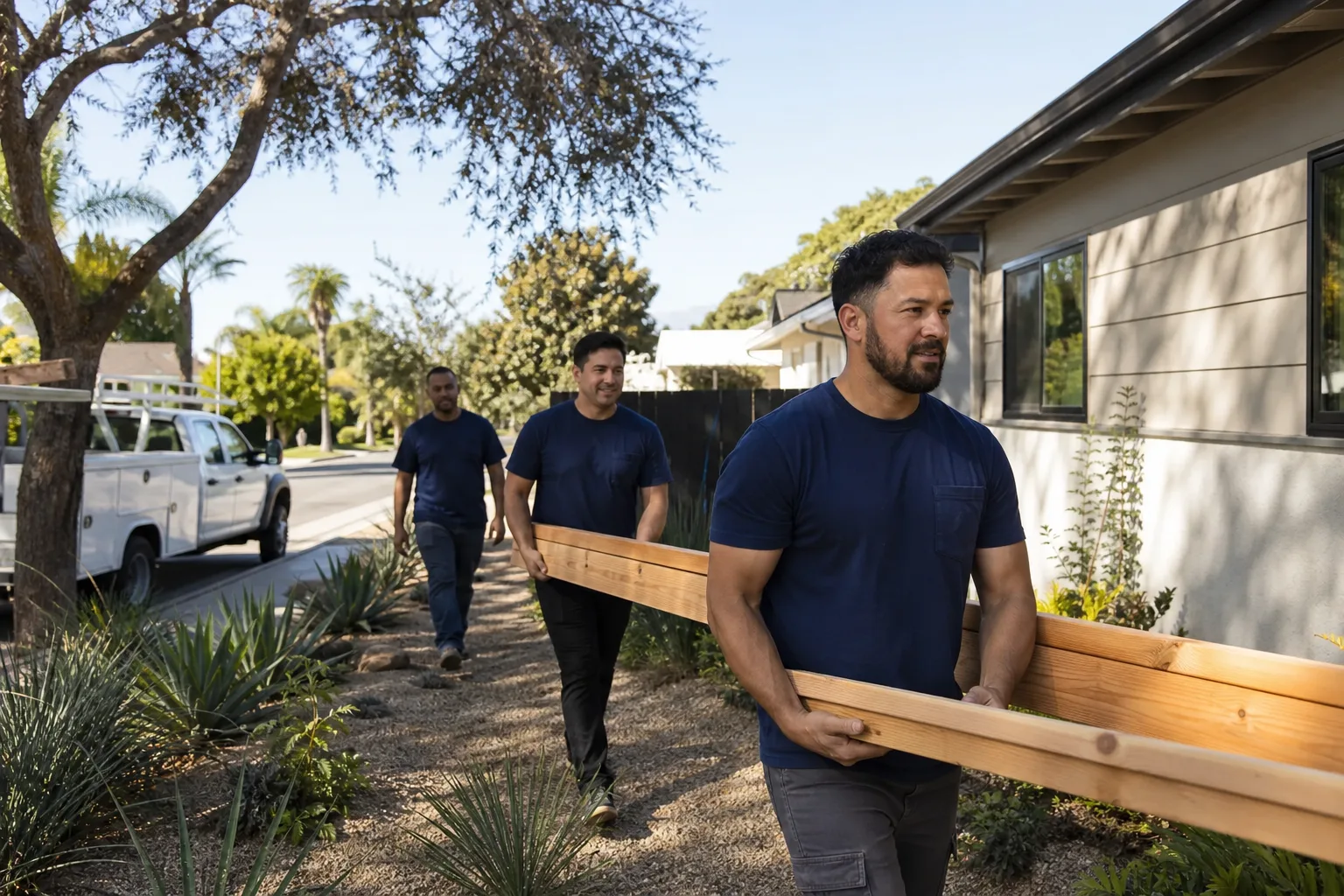
This is the standard we hold ourselves to. Every technician who shows up is background-checked, identity-verified, uniformed, and photo-badged – with name and photo sent to you before arrival. We call it the Threshold Standard, and it exists precisely because “who is coming to my property?” is a fair question that too many builders wave off.
What Nevada C-3 and B-2 License Verification Actually Looks Like
Nevada licenses residential builders under specific classifications. A C-3 is a general building contractor license for residential work; a B-2 covers residential and small commercial remodeling. For an ADU or room addition, you want a properly classified license that covers the work being done – not just “a license.”
Verifying it takes five minutes on the Nevada State Contractors Board website. Look up the license number the contractor gives you and check three things: the license is active, the classification matches your project, and the name on the license matches the name on your contract. Mismatches are a warning sign.
Then there’s the confusion between three different protections, and this is where homeowners get caught:
- Licensed means the contractor is legally allowed to practice in Nevada. It says nothing about whether you’re covered if something goes wrong.
- Bonded means there’s a surety bond in place. It’s protection for the state and a limited backstop for you if the contractor defaults – not a warranty on the work.
- Insured means liability coverage protects you if a worker is hurt on your property or if construction damage occurs. It is not the same as bonded.
Ask for the certificate of insurance directly – from the insurer, not the contractor – and confirm the policy is current. “Licensed and bonded” alone is not the same as “insured.” A builder who resists showing proof is answering your question already.
Reading the “Unforeseen Conditions” Clause in Your Contract
Every legitimate construction contract includes a clause for contingencies. The problem is that the same clause can be written two very different ways, and the difference is worth tens of thousands of dollars.
A fair clause says something like: “If unforeseen conditions are discovered, the contractor will document them, provide a cost estimate, and obtain written homeowner approval before proceeding.” That protects both sides.
An unfair clause says something like: “The contractor reserves the right to adjust the project cost for unforeseen conditions.” No definition of “unforeseen.” No approval step. No cap. That single sentence lets a contractor move scope-creep costs onto your invoice without asking.
Read the clause out loud and ask: what stops this from absorbing every overrun on my job? If the answer is vague, push back before signing. Good builders don’t blink at this – the fair clause protects them too.
Real unforeseen conditions do exist in Summerlin. Rocky soil on some lots near Red Rock, utility lines not shown on the original survey, and older stub-outs on garage conversion projects can all surface legitimately. The point isn’t that surprises never happen. It’s that you deserve to see the cost and approve it before it lands on your bill. For a fuller sense of how scope and pricing get handled on additions, see our home addition contractor in Summerlin breakdown.
The Permit-Pull Test: A Simple Disqualifier
If a contractor offers to let you pull your own permit, that’s not a favor. It’s an immediate disqualifier.
Here’s why. In Nevada, permits must be pulled by a licensed contractor who is responsible for the work being done. When a homeowner pulls their own permit – sometimes at the contractor’s suggestion – the contractor has engineered a way out of the inspection chain of responsibility. If an inspector flags a problem, the permit holder is you. If the work fails inspection, the paper trail leads to you, not the builder.
A proper builder pulls the permit, handles the inspection scheduling, and walks you through the results. That’s part of the job, not a line item to shift onto the homeowner.
Run this test early, before you sign:
- Ask directly: “Will you pull all permits in your company’s name?” A yes should come without hesitation.
- Ask who schedules inspections. It should be the contractor’s responsibility, not yours.
- Ask what happens if inspection fails. A written guarantee that the contractor fixes the issue at no additional cost to you is the answer you want.
- Confirm engineering and plan check are included. If the contractor expects you to coordinate engineering or plan submittal, you’re paying for a project manager you didn’t hire.
Summerlin projects often run through Clark County or the City of Las Vegas depending on the specific parcel, and the permit process differs slightly between the two. A builder who knows your specific jurisdiction should be able to tell you which office will review the plans before you ask.
Summerlin-Specific Warnings: Climate, HOA, and Code
Summerlin has its own quirks that catch out-of-town builders – and homeowners who don’t know to ask. These aren’t dramatic red flags, but they reveal whether the contractor actually knows the ground they’re building on.
- HOA approval is a real gate. Most Summerlin villages have design review committees that must approve any detached ADU or garage conversion before permits move forward. A builder who doesn’t mention HOA review is either inexperienced in Summerlin or planning to skip it. Either one costs you months.
- Summer heat loads a real design decision. Summerlin summer highs push past 105°F, and an ADU built without proper insulation and cooling spec becomes unusable half the year and expensive to run the rest. Ask any builder how they handle the cooling load in Summerlin.
- Soil varies by village. Lots in The Trails and parts of Red Rock Country Club have caliche layers that require different excavation approaches than lots in Summerlin West. A builder who plans foundation work without a soil check on your specific lot is guessing.
- Setback rules vary by village. The required gap between your new structure and the property line (the setback) differs by setback type – front, side, rear – and by HOA. Confirm both the county setback and the HOA’s requirement before design starts.
If a builder can’t speak specifically to Summerlin conditions – HOA, soil, heat load, setback – that’s a warning sign you can read in the first ten minutes of a conversation.
The Green Flags That Should Accompany a Real Estimate
Avoiding red flags is only half the story. A legitimate ADU builder in Summerlin brings a specific set of signals to the table, and if they’re missing, the red flags usually aren’t far behind. Here’s what a real estimate should look like:
- A written price, line by line. Site work, foundation, framing, electrical, plumbing, HVAC, finishes, permit fees, and contingency – each on its own line, not lump-summed.
- Product and brand options explained honestly. Whether you’re looking at a Mighty Buildings prefab, a Boxabl unit, a Plant Prefab kit, or a Tuff Shed conversion, a good builder tells you which product line fits your lot, accessory dwelling unit rules, and budget – and which doesn’t.
- Named crew before arrival. Name, photo, and a photo badge at the door.
- Written guarantee terms. “We stand behind our work” is a sentence. A written guarantee covering workmanship for one full calendar year from project completion is a document. Ask for the document. The same coverage should apply to a free second visit if any element of the build fails in the meantime.
- A live person on the phone. Time-sensitive questions about your build during the day matter. Voicemail trees are a small signal of a small operation.
Smaller additions follow the same principle. A room addition contractor in Summerlin should demonstrate every one of these signals, whether the project is a detached ADU or a 400-square-foot bump-out. For homeowners still sketching the first version of what they want, our Sutton ADU Builders Summerlin home page gives the fuller picture of how we structure a first conversation.
Common Mistakes to Avoid
- Accepting a verbal price as a working number. A figure over the phone or in conversation is not the price. Only what’s written in a signed estimate is the price. Every adjustment before signing should trigger an alarm.
- Skipping the Nevada State Contractors Board look-up. Five minutes on the NSCB website answers the license classification, active status, and name-match questions. Homeowners skip this step more than any other, and it’s the one that would catch the worst builders first.
- Confusing “bonded” with “insured.” These are separate protections. Ask for a certificate of insurance from the insurer and confirm it’s current. “Licensed, bonded, and insured” should be verifiable in three separate documents.
- Missing the “unforeseen conditions” clause. Reading past that clause without pushing back lets overruns become your problem. The fair version requires written approval before work proceeds. The unfair version doesn’t.
- Agreeing to pull your own permit. It feels convenient. It puts the inspection chain of responsibility entirely on you. It should never be the arrangement on an ADU or room addition.
- Assuming the crew is vetted. Day-labor subcontractors are common in construction. If the contractor can’t tell you who is coming to your property, or the crew changes every week, ask why. In Summerlin, where many homeowners live on-site during construction, this matters.
- Not asking about HOA approval before design. A detached ADU in most Summerlin villages needs HOA design review before permits move. Starting construction without HOA sign-off is a delay measured in months, not days.
When to Call a Professional
Some decisions are too important to make without expert input. If you’re comparing written estimates and can’t tell which contingency line is honest, call a professional. If a contract’s “unforeseen conditions” language is unclear, call. If you’ve been talking to a builder for weeks and still haven’t seen a written price, this is the moment to bring in a second opinion. And if you’re planning a detached ADU or garage conversion in Summerlin and want the HOA, soil, heat-load, and permit questions answered by someone who builds here regularly, that’s exactly what a professional estimate is for.
We’ve seen homeowners save themselves tens of thousands by getting a second written estimate before signing the first one. It costs nothing and it resets the negotiation with hard facts.
Sutton ADU Builders Summerlin offers free estimates in Summerlin. Call (833) 355-2818 to schedule yours.
Frequently Asked Questions
The most common red flag is a verbal price that keeps adjusting before any contract is signed. A high written quote is honest and lets you compare options. A low verbal number that grows with each conversation is a hook, and it’s the pattern most often followed by surprise invoices and scope-creep costs later. Call (833) 355-2818 for an exact written quote – estimates are free.
Look up the license number on the Nevada State Contractors Board website and confirm three things: the license is active, the classification (such as C-3 or B-2) covers your project type, and the name on the license matches the name on your contract. A mismatch between those last two is a warning sign worth walking away from. Any Summerlin builder serious about the work will give you the number without being asked a second time.
No. It’s a disqualifier. Permits must be pulled by a licensed contractor who is responsible for the work performed. When a homeowner pulls their own permit, the inspection chain of responsibility runs to them, not the builder – which means every inspection failure, re-inspection, and code issue lands on your side of the ledger. Ask up front and walk away if the answer is anything other than “we pull the permit in our name.”
Licensed means the contractor is legally allowed to work in Nevada. Bonded means a surety bond is in place – a limited backstop if the contractor defaults, not a warranty on the work. Insured means liability coverage protects you if a worker is injured on your property or if construction damage occurs. They are three separate protections, and a legitimate Summerlin builder verifies all three with documents rather than with a phrase.
Ask before the first day of work: “Will the people on my property be background-checked employees, or day-labor subcontractors?” A legitimate operation will tell you who is coming and when, and will confirm the vetting standard. At Sutton, every technician is background-checked, identity-verified, uniformed, and photo-badged, and we send you the name and photo before arrival. Anything less on a Summerlin project where you live on-site during construction is a fair reason to ask harder questions.
Most detached ADU projects run several months from permit to completion, with the big variables being HOA design review, Clark County or City of Las Vegas plan check, and site work. HOA approval is the most common surprise delay for Summerlin builders who don’t know the village review process. A contractor who can map the timeline for your specific parcel – HOA, jurisdiction, soil, engineering – before you sign is telling you they’ve done this in Summerlin before.
The Bottom Line
Most ADU contractor disasters don’t start with a dramatic warning. They start with a homeowner being polite – not asking for a written price, not checking the NSCB website, not reading the “unforeseen conditions” clause closely. The small moments matter more than the obvious ones. A written price, a verified license, a fair contingency clause, a request to pull every permit, and confidence in who is walking onto your Summerlin property – those five checks catch the majority of problems before they cost you anything. If you’re not sure, call for a free estimate and reset the conversation with hard facts. Call (833) 355-2818 to schedule your free estimate.
Written by the team at Sutton ADU Builders Summerlin.