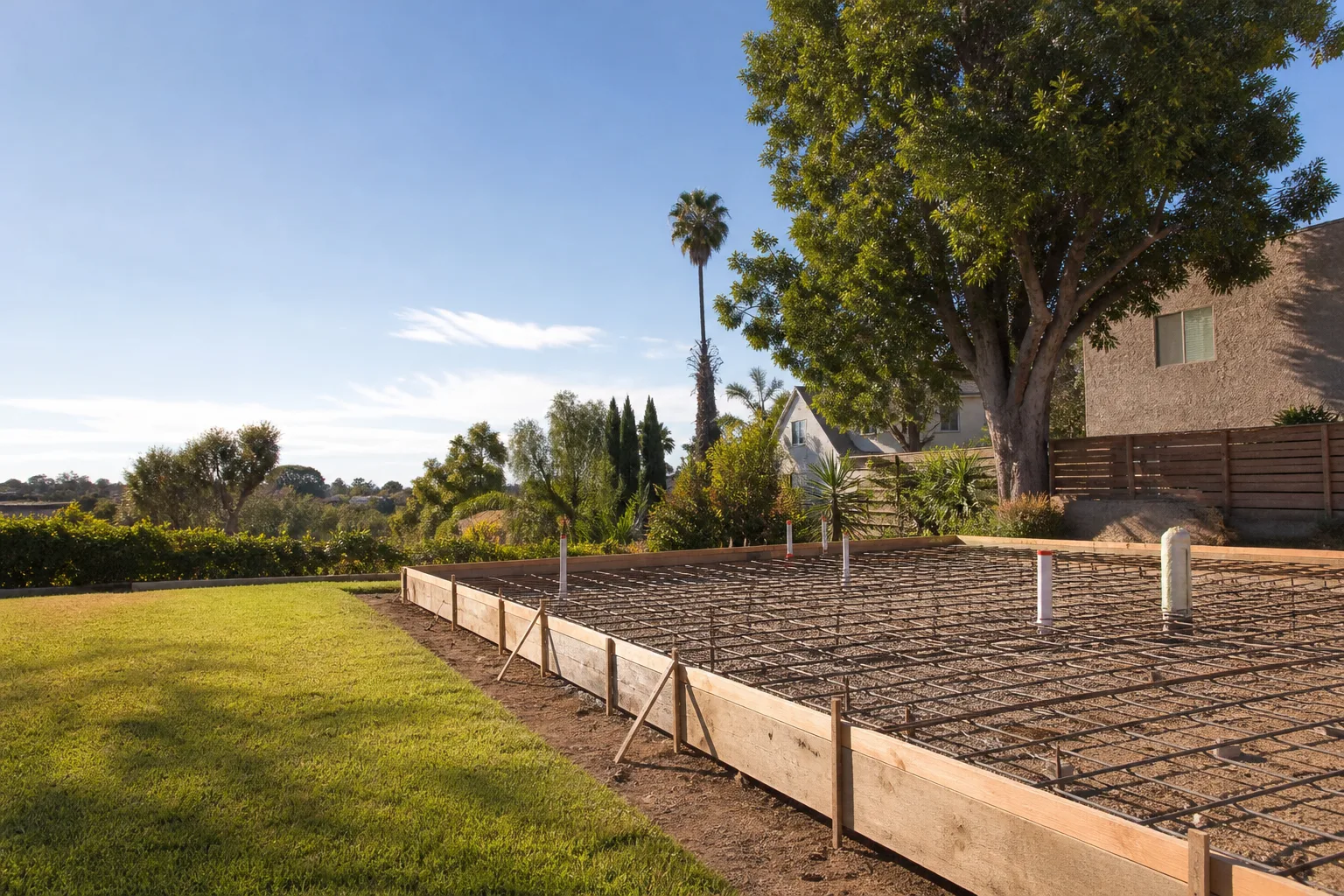
Boxabl Site Prep & Utilities: The Summerlin Owner’s Guide
Site prep and utility connections for a Boxabl in Summerlin are the part of the project Boxabl doesn’t ship in the box: the foundation, pad, and trenching, plus the electrical, water, sewer and gas tie-ins that turn a delivered unit into a legal, livable structure. Typical installed cost here runs $28,000 – $65,000 depending on lot conditions, utility distance, and whether the unit is permitted as an ADU or accessory structure. Owners usually find out something is wrong with this work at one of two moments: the county plan reviewer rejects the submittal, or the unit is set and the inspector won’t sign the utility connections because the trench depth, bonding, or foundation anchoring doesn’t match the approved drawings.
We install and repair Boxabl-compatible site prep and utilities across Summerlin, and we’re an independent contractor, not affiliated with Boxabl. This page covers exactly what goes into the ground and the panel, what fails, what it costs, and where a homeowner should stop and call.
Which Boxabl Models This Applies To
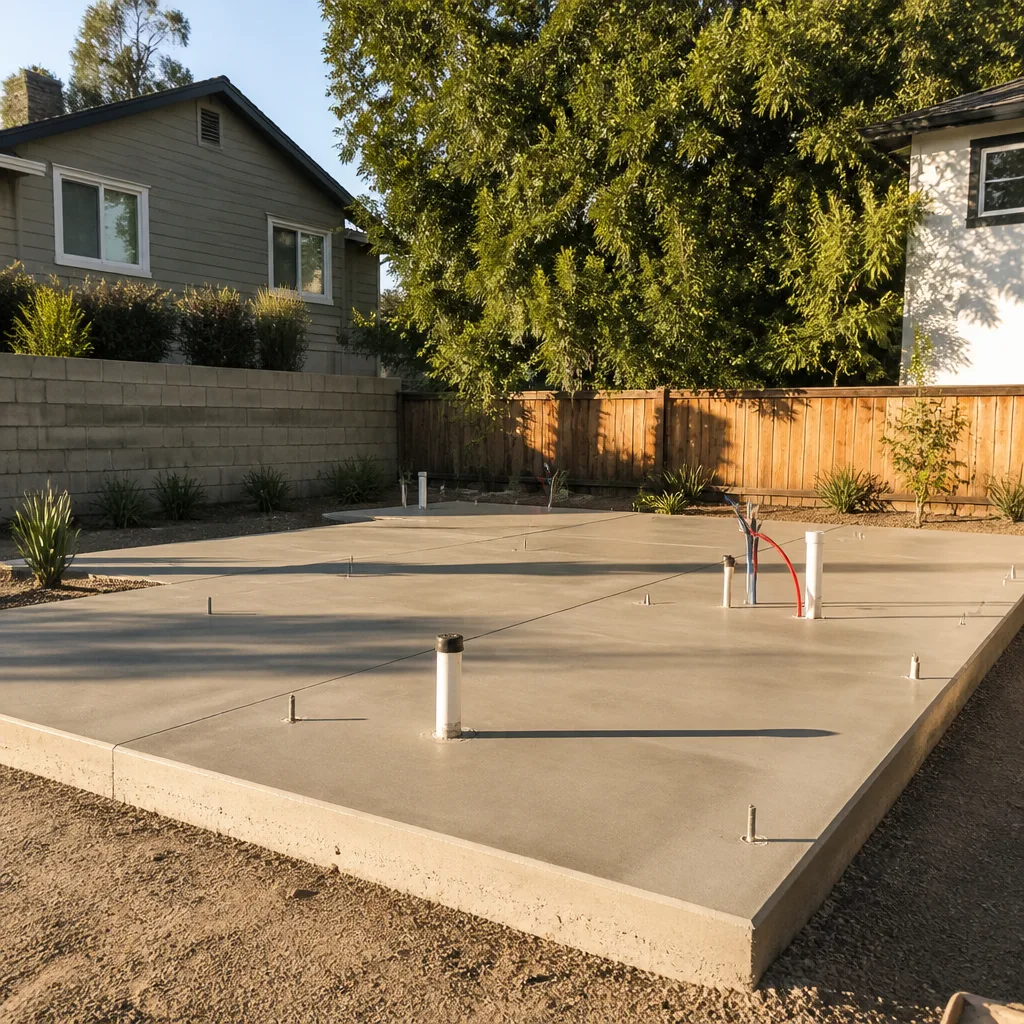
Boxabl’s product line has moved through naming changes, and that matters more for site work than people expect. The Casita-derived units that circulated in earlier reservation batches and the current production units do not share identical utility stub-out locations, structural anchor points, or electrical load profiles. The connection layout printed on the shipping documentation for your specific unit is the document that governs, not a floor plan pulled from a forum.
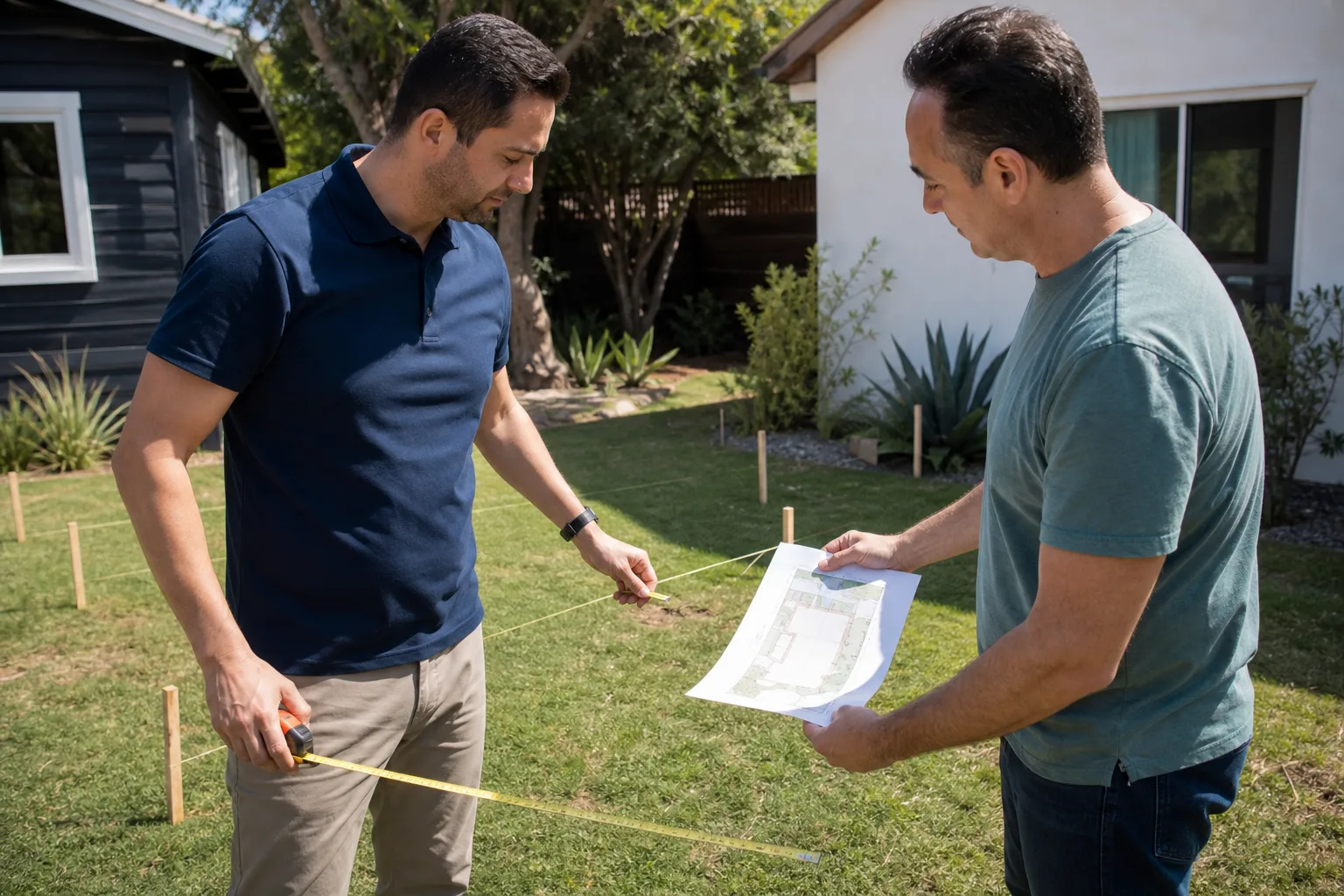
How to identify what you have: look for the data plate or serial label on the unit (usually inside near the electrical panel and again on the exterior frame rail), then match the serial to the utility connection diagram in the paperwork delivered with the unit. Measure your actual stub-out locations and photograph them with a tape measure visible in frame before anyone quotes trenching. A six-inch discrepancy in a water stub moves a trench and changes a price.
On the OEM-versus-aftermarket question: for the unit itself, use only Boxabl-approved components and follow their connection guidance, because the factory warranty conversation depends on it. For everything between the unit and the utility meter, hardware is standard grade and there’s no reason to pay a premium for a branded conduit or bonding clamp. The AHJ (authority having jurisdiction, meaning the county or city building department that signs off) cares about code compliance and listed materials, not logos.
Signs Your Boxabl Site Prep & Utilities Is Failing
- Recurring GFCI trips on the same circuit. Usually moisture intrusion at an exterior junction box or a bonding issue between the unit frame and the grounding electrode system. Summerlin’s monsoon-season driving rain finds any gap in the sealant around the penetration points.
- Water pooling near the unit base after irrigation. Grading that falls toward the pad instead of away from it, or a foundation pad set a half inch low. This one gets worse every year and quietly undermines the anchor system.
- Slow drains or sewer odor inside the unit. A slope problem in the drain line between the unit and the main, or a vent that was tied in wrong. Drain lines need consistent fall; a section that bellies holds waste and clogs repeatedly.
- Settlement cracks at the pad edges or doors that stop latching. Expansive clay soils common in parts of the Summerlin area move with moisture swing. If the pad wasn’t engineered for that, the whole unit shifts with it.
- Failed inspection tags or a permit that stalled out. Often a trench depth, conduit burial depth, or disconnect placement that didn’t match the approved plan. This blocks occupancy even when the physical work looks fine.
Replacement Cost & What’s Included
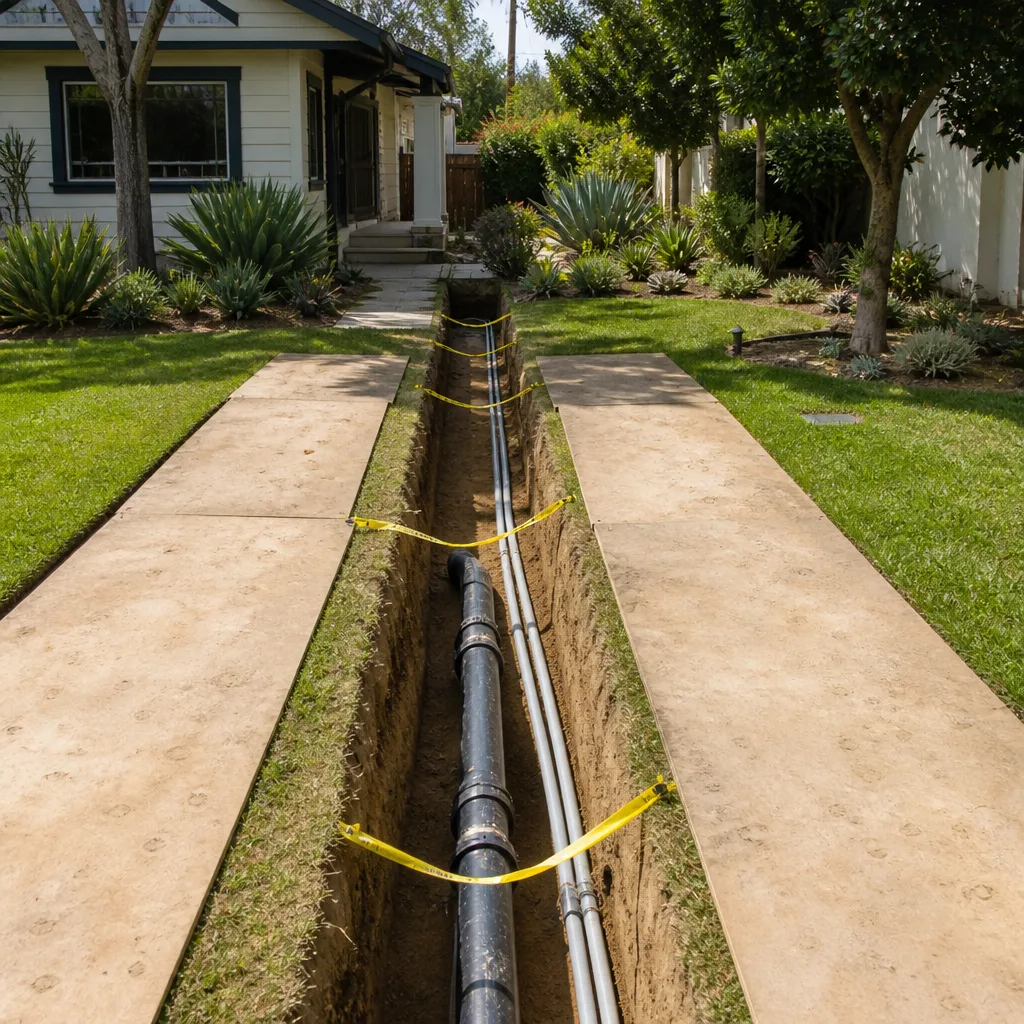
Real ranges for Summerlin, not teasers:
| Work item | Typical installed range |
|---|---|
| Graded pad / foundation and anchor system (repair or replacement) | $9,000 – $22,000 |
| Electrical service trench, conduit, panel, and connection | $7,500 – $18,000 |
| Water and sewer tie-ins with trenching | $6,000 – $15,000 |
| Gas line (if applicable) | $2,500 – $7,000 |
| Permit fees and inspection coordination | $1,200 – $4,500 |
What drives the range upward: distance from the unit to the utility connection point, soil conditions (caliche and rock change trench labor significantly), and whether an existing panel has capacity or needs a service upgrade. Every quote we give is written line-item before any work starts, so you see the trench, the materials, the labor, and the permit line separately. Workmanship is covered by the 365-Day Done Right Promise for one full calendar year from completion.
DIY or Call Us?
We’ll be straight with you: this is not a DIY category. It isn’t just the trench being hard work. Electrical service connections, gas lines, and the bonding and grounding that protects the unit’s frame are genuinely dangerous, and utility work done wrong can fail inspection long after the dirt goes back in, costing far more to undo. Trenching near existing buried utilities without locates is a hazard in its own right.
What an owner can safely check: photograph the unit’s data plate, gather the connection diagram, confirm your permit status with the county, watch for pooling water and slow drains, and write down when GFCI trips happen. That’s a useful list for whoever comes out. Anything involving the panel, the meter, or a gas line should go to a licensed trade. Call us at (833) 355-2818 and we’ll walk through what you’re seeing before you commit to anything.
FAQs
The civil side (pad, trenching, utility tie-ins) is built to last decades when it’s done correctly, but inspect it annually, because sealant at penetration points and grading both degrade. Summerlin’s temperature swing, from summer highs well past 100°F to winter nights near freezing, works on sealants and soil moisture. Call (833) 355-2818 for an assessment if your unit is more than a few years old.
Often yes. A single GFCI fault, a re-graded slope, or a re-trenched drain section can be corrected without touching the rest. A pad with structural settlement or a service that was undersized from day one usually can’t be patched. We diagnose first and quote the repair honestly rather than defaulting to replacement.
Electrical corrections typically run one to three days, water and sewer re-trenching three to seven days, and pad or foundation work one to three weeks depending on scope and inspection scheduling. Permits are pulled and inspections passed as part of the scope. Call (833) 355-2818 for a written timeline specific to your lot.
Boxabl-specific components come through the manufacturer’s supply chain, and we follow their connection guidance to protect your unit’s warranty standing. Standard utility hardware is sourced from local suppliers, and we don’t carry parts on a truck, so lead times are quoted upfront and not guessed at. Call (833) 355-2818 to confirm availability for your specific unit.
Every technician who comes to your property is background-checked, identity-verified, and photo-badged, and you get their name and photo before they arrive, part of what we call the Threshold Standard. We work directly with Boxabl owners and also handle Abodu, Cover, and Dvele units, so if you’re weighing a different product line for the same lot, we can give honest guidance.
Call Sutton ADU Builders Summerlin at (833) 355-2818 for a free estimate on your Boxabl site prep and utilities. A written price, a clear timeline, and a real person on the phone, any hour.
Written by the team at Sutton ADU Builders Summerlin, serving Summerlin and nearby areas.