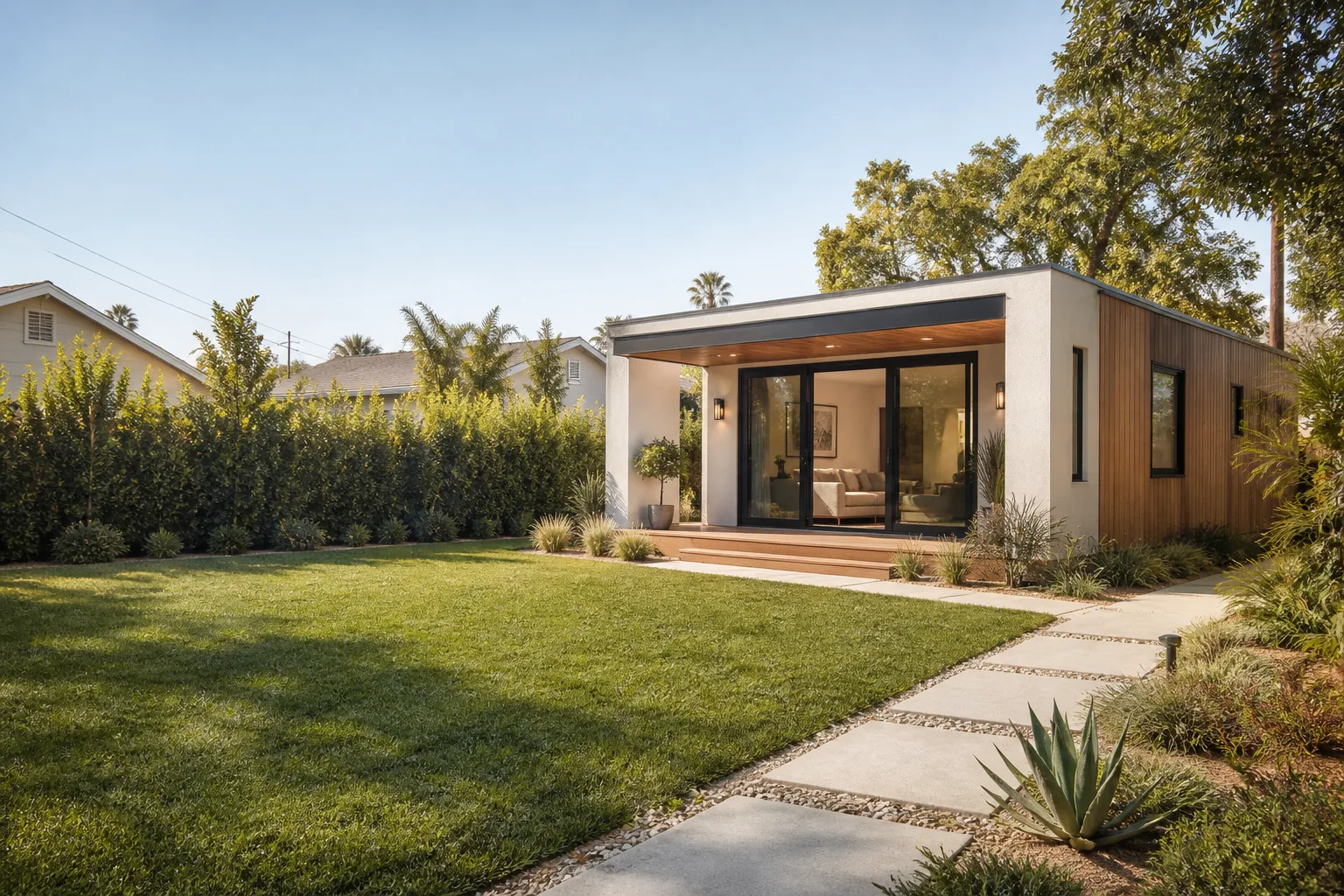
James Hardie Junior ADU Conversion: The Summerlin Owner’s Guide
A James Hardie junior ADU conversion in Summerlin typically runs $14,500 – $28,000 installed, depending on scope, cladding system, and how much existing framing and trim has to be reworked. Most Summerlin projects we scope are completed in two to four days once materials are on site and permits are signed off. Homeowners usually find out this work needs attention one of two ways: a contractor flags a failed panel or flashing during a separate inspection, or they notice the ADU shell itself – hardie panels, corner trim, or the conversion-to-structure seam – starting to peel, cup, or hold water after a summer monsoon or a hard winter freeze.
Which James Hardie Models This Applies To
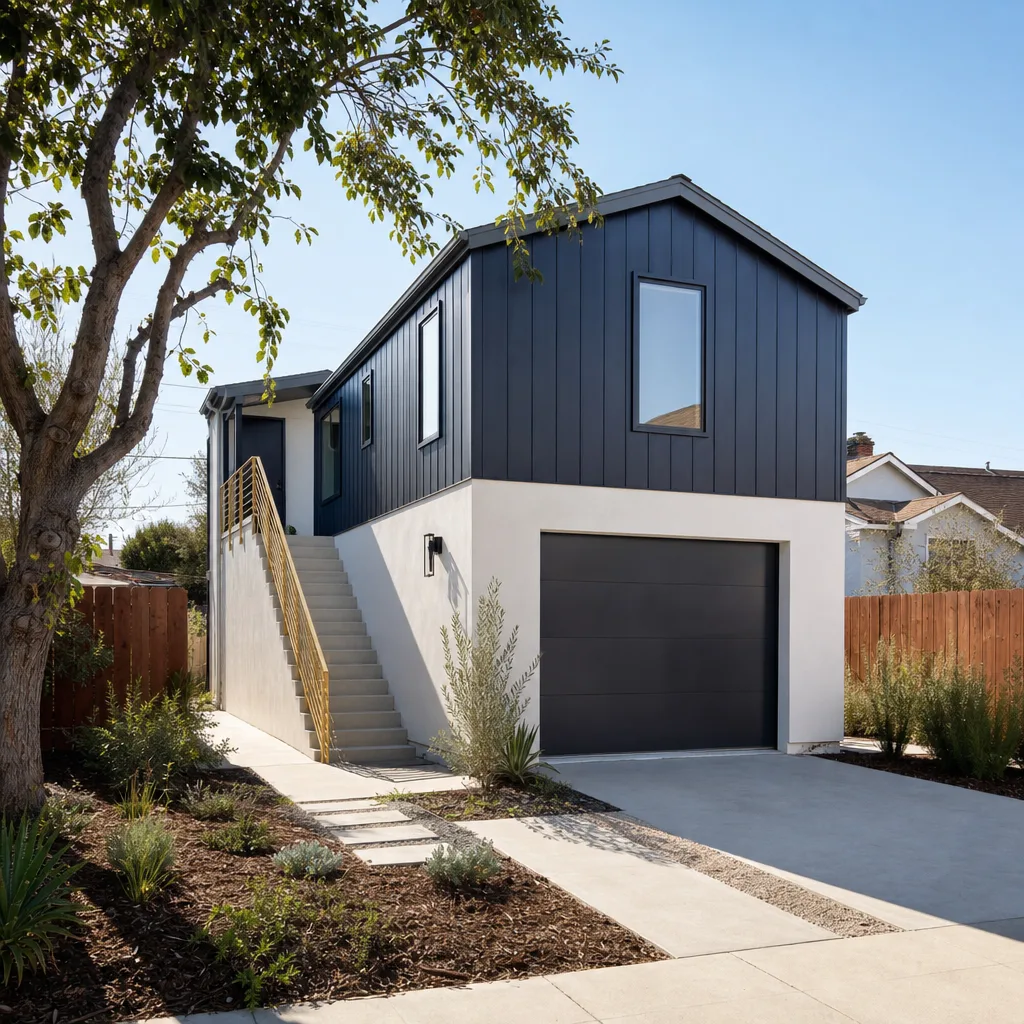
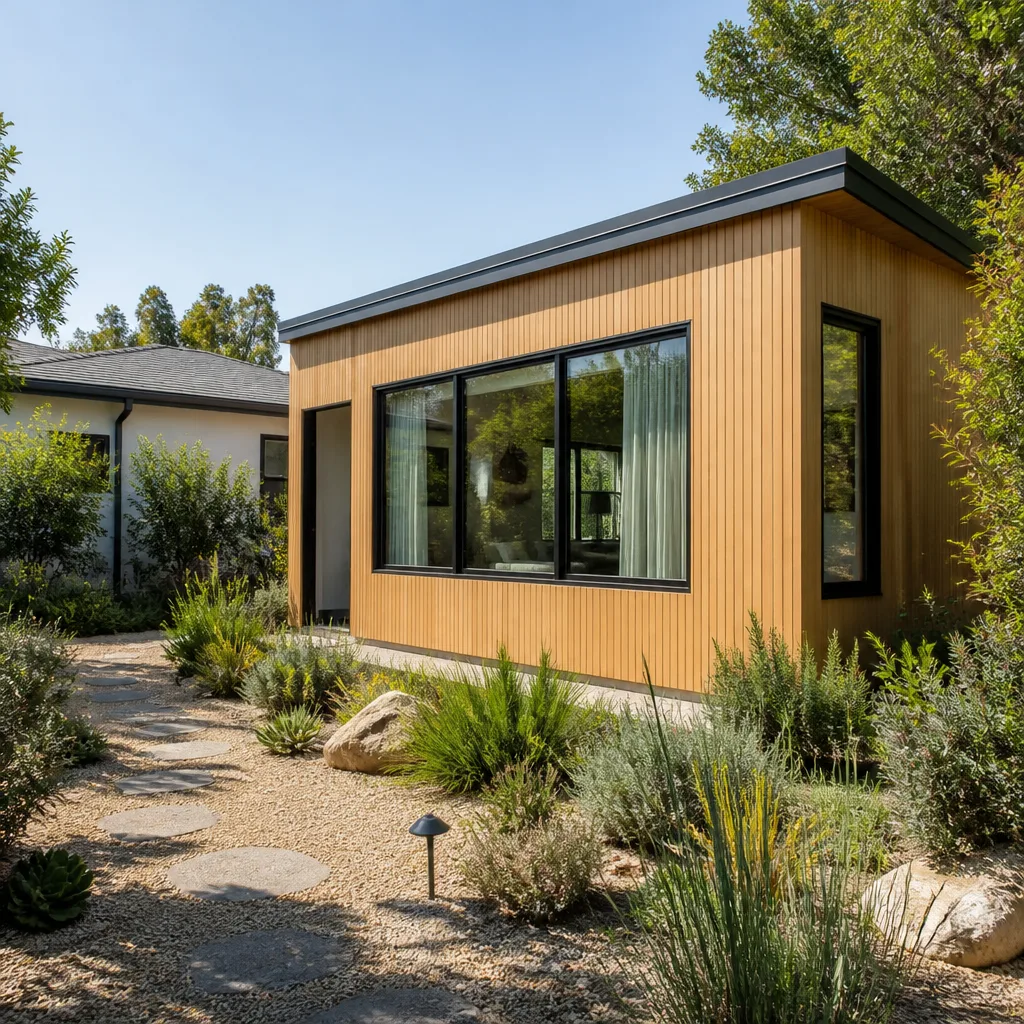
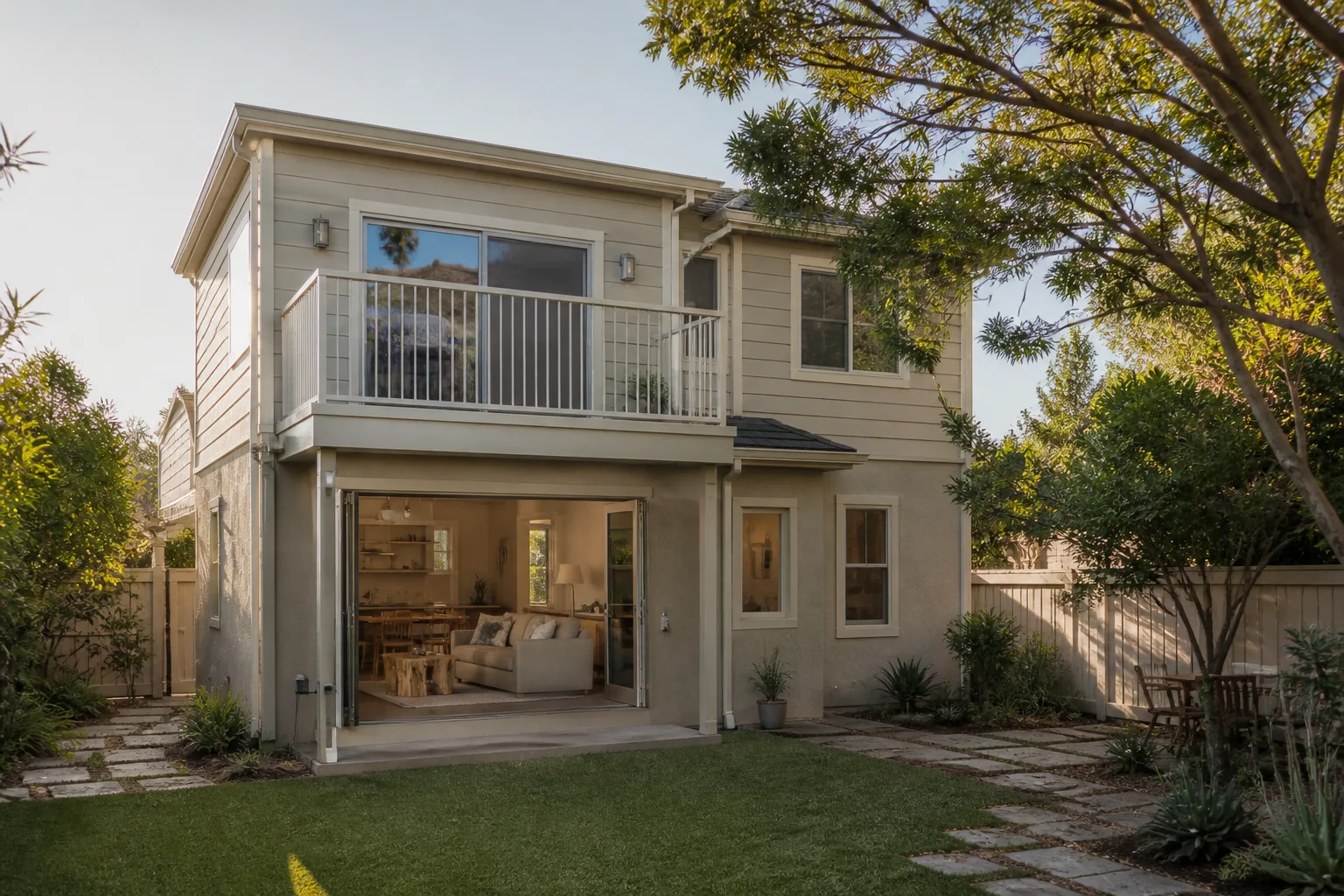
James Hardie doesn’t sell a product called a “junior ADU conversion” as a single SKU. The term covers the fiber-cement envelope work that takes a garage, shed, or small detached structure and brings it up to a livable junior ADU standard. That means HardiePlank lap siding, HardiePanel vertical siding, HardieTrim boards, and the associated flashing and seam trim that tie those elements into a conversion. In Summerlin, the most common substrate we see is HardiePlank 5/16-inch lap siding on the original structure being married to new conversion walls, and the joint between the two is where most failures begin.
To identify what you actually have, look for the mill stamp on the back face of any accessible panel or the end of a lap board. It lists the series, thickness, and fire rating. James Hardie changed its lap siding printed labels around 2014, so an older stamp versus a current one tells you a lot about what’s behind the wall. For Summerlin owners, that stamp matters because the right replacement has to match thickness, profile, and fire rating – especially on structures that sit close to a property line or fall under HOA design review, which many Summerlin communities enforce.
Genuine James Hardie parts cost more than generic fiber-cement equivalents, and you’re paying for consistent density, an engineered paint system (ColorPlus or Primed), and dimensional accuracy that matters when panels butt against existing corners. Aftermarket fiber-cement can work on a covered, low-exposure wall. On a west-facing Summerlin wall that takes desert sun for 6+ hours a day, we steer homeowners to genuine Hardie, because the thickness and finish variables show up as premature cupping within a few summers.
Signs Your James Hardie Junior ADU Conversion Is Failing
- Peeling or bubbling paint at panel edges. Moisture is getting behind the panel, usually through a failed caulk joint or missing head flashing. Fiber-cement holds paint far better than wood, but only when the panel stays dry at the cut edge.
- Soft or chalky spots on the lower third of a wall. That’s typically a sign of splash-back moisture or irrigation overspray landing on the panel, which breaks down the surface over a few seasons.
- Visible gaps at the conversion-to-structure seam. Movement between the original structure and the new conversion walls opens the seam. This is the single most common failure we see on Summerlin conversions, and it lets water in fast.
- Cupping, warping, or bowing panels. Usually means the panel was installed tight to framing with no weep path, or the wrong fastener spacing was used. Once a panel cups, it won’t lay flat again.
- Rust streaks from fasteners or trim corners. Galvanized or incorrect fasteners in a high-heat, high-UV Summerlin environment corrode faster than they should, and the staining means water is reaching the fastener head.
Replacement Cost & What’s Included
Installed pricing for the fiber-cement envelope portion of a Summerlin junior ADU conversion runs roughly:
- Targeted panel and trim replacement (one wall or partial seam): $1,800 – $4,200
- Full envelope re-clad on a small detached structure: $9,500 – $16,000
- Full junior ADU conversion envelope, including flashing and seam trim: $14,500 – $28,000
- ColorPlus upgrade vs. field-painted primed panels: add roughly 8 – 12% to material cost
What drives the range: how many square feet of panel you’re replacing, whether the framing behind it is sound or needs repair, whether your Summerlin HOA requires a specific color or profile match, and whether the conversion touches an existing roofline. We give you a written price before any work starts – the line items showing material, labor, and disposal separately, no surprise additions mid-project. Labor includes tear-off, disposal, and reinstallation. The 365-Day Done Right Promise covers defects in workmanship for one full calendar year from project completion.
DIY or Call Us?
Fiber-cement siding work isn’t high-tension or electrical – you can safely walk your Summerlin property and check the things in the list above yourself: look for soft spots, press gently on panel edges, run a hand along the conversion seam, and check paint around fasteners. Where DIY typically goes wrong is at the seam and flashing stage. Getting a conversion-to-structure joint right requires the correct head flashing, a proper drainage plane, and fastener spacing that matches Hardie’s install spec – skip one of those and you’re back to peeling paint within two summers. On a west-facing Summerlin wall, that’s a repair every few years instead of none.
If you’ve found soft panels, an open seam, or water stains, call (833) 355-2818. We’ll send a named, photo-badged technician to look at it, give you a written price before any work, and if you’ve already had a repair from us that failed, we come back at no charge.
FAQs
James Hardie rates its fiber-cement siding for 30 years on the material itself, but installed lifespan depends almost entirely on installation and maintenance. In Summerlin’s climate – intense UV, dry heat, and monsoon-season water – well-installed HardiePlank with proper flashing holds up for 20 to 30 years with repainting every 10 to 15. Neglected caulk joints and missing flashing shorten that to 8 to 12 years. Call (833) 355-2818 for an exact quote on yours – estimates are free.
Sometimes, yes – a single panel with localized edge damage can often be cut out and replaced without touching the rest of the wall. But if the damage is at a seam or the panel has cupped or bowed, the repair rarely holds, and a partial replacement matching older Hardie stock is often harder than a full wall swap. We’ll tell you which case you’re in after looking at it. Call (833) 355-2818.
A basic single-wall panel and trim replacement takes one to two days once materials are on site. A full junior ADU conversion envelope runs two to four days, longer if the structure behind the panels needs repair or if your Summerlin HOA adds a review step before work starts. No surprise change orders – if something behind the wall adds scope, you get a new written price before we touch it.
We source genuine James Hardie materials through normal trade channels to match your existing series, thickness, and fire rating – we don’t carry stock and don’t keep parts on a truck, so each project is matched to what you actually have. We can also work with quality aftermarket fiber-cement when the wall doesn’t need Hardie-specific specs. Sutton ADU Builders Summerlin is an independent service provider, not affiliated with James Hardie. We also work with Abodu, Cover, and Dvele ADU lines. Call (833) 355-2818 to schedule your free estimate.
Written by the team at Sutton ADU Builders Summerlin, serving Summerlin and nearby areas.