Last updated November 17, 2026
How Long Does ADU Builders Take? Timelines and What to Expect
Clark County’s ADU permit queue averaged 11 to 14 weeks in 2024. That’s longer than the entire framing and rough-in phase of most backyard homes, yet the typical contractor timeline you’ll see online quietly assumes a six-week permit window. The gap between that assumption and reality is where budgets stretch and homeowners spend months wondering what’s happening. In Summerlin, where master-planned HOA review layers on top of county permitting, the calendar gets more complicated before it gets simpler. This guide walks through what an honest ADU schedule looks like phase by phase, the two local bottlenecks that add weeks most timelines never mention, and what a written schedule commitment should actually say.
Quick Answer
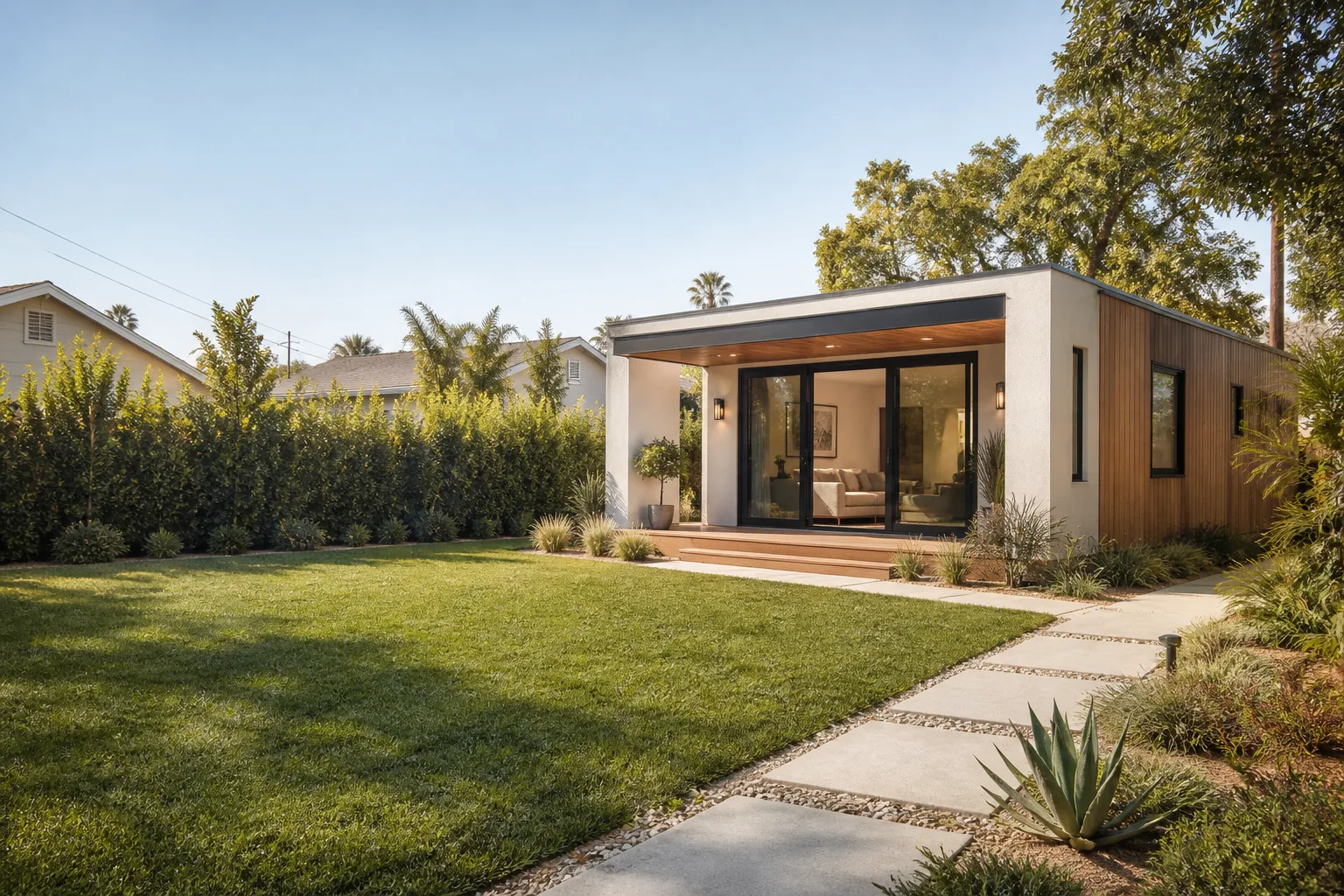
Most detached ADUs in Summerlin take 9 to 14 months from signed contract to move-in: roughly 4 to 6 months for design and Clark County permitting, 2 to 3 months for site work and foundation, 5 to 7 weeks for framing and MEP rough-ins, then 2 to 3 months of finishes and final inspections. Garage conversions run shorter at 4 to 7 months total, and prefab units from brands like Abodu or Plant Prefab can compress the on-site build to a matter of weeks while permitting stays the long pole.
Table of Contents
- Phase-by-Phase Timeline for a Summerlin ADU
- Why Permitting Takes Longer Than Anyone Tells You
- Caliche Soil: The Excavation Surprise Desert Timelines Ignore
- HOA Approval and County Permitting: Parallel Tracks That Sometimes Collide
- Inspection Checkpoints and the Two-Week Waits to Plan Around
- Prefab vs. Stick-Built: How the Timeline Splits Differently
- What a Written Schedule Commitment Should Look Like
- Common Mistakes to Avoid
Phase-by-Phase Timeline for a Summerlin ADU
The clearest way to understand an ADU build is to see it as separate phases with separate clocks. Some phases overlap. Most don’t. Here’s what we see in Summerlin and across the Las Vegas Valley, with honest ranges rather than best-case numbers.
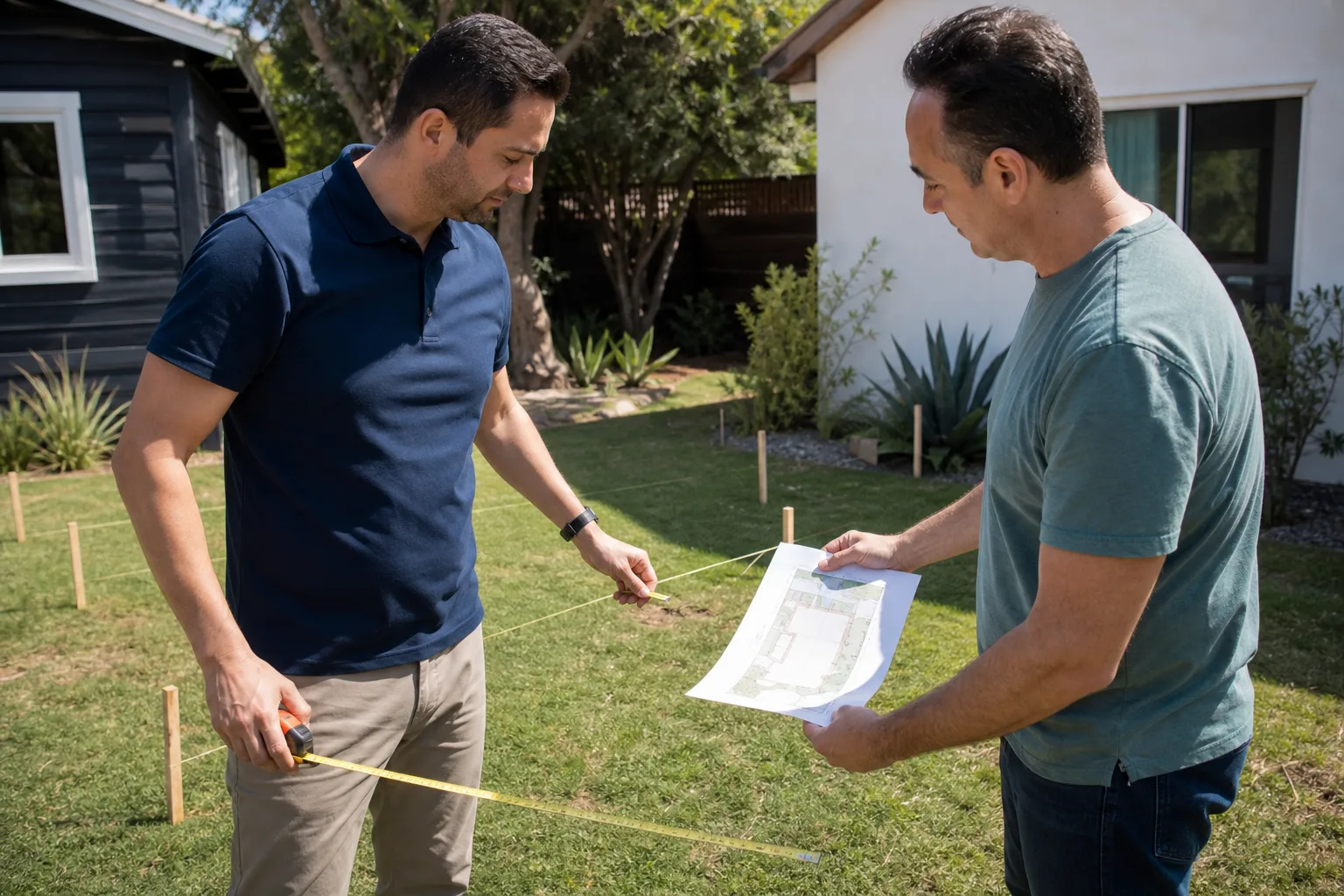
- Design and drafting (4 to 8 weeks). Site survey, architectural drawings, structural engineering, and title-24 energy compliance. Prefab product lines like Abodu or Dvele shorten the drawings because the shell is already engineered, but site-specific plans still take a few weeks.
- Clark County permitting (11 to 16 weeks). Plan check, resubmittals, and permit issuance. This is the phase that dwarfs all others and the one most timelines understate.
- Site prep and excavation (1 to 3 weeks). Demolition of existing slabs or patios, grading, and utility locating. Caliche can double this (see below).
- Foundation (1 to 2 weeks). Forming, rebar, inspection, pour, and cure. Las Vegas summer heat means concrete cures fast but pours need early-morning scheduling.
- Framing (2 to 3 weeks). Wall framing, roof trusses, sheathing, and window setting. Prefab modules may take days rather than weeks once they arrive.
- MEP rough-ins (2 to 3 weeks). Mechanical, electrical, and plumbing runs before drywall. Each trade requires its own inspection.
- Insulation, drywall, and finishes (6 to 9 weeks). Insulation, drywall, texture, paint, flooring, cabinetry, fixtures, and exterior cladding such as James Hardie siding.
- Final inspections and punch list (2 to 4 weeks). Final building, electrical, plumbing, and mechanical sign-offs, then a punch walk with the homeowner.
Stacked end to end with no overlaps, that’s 9 to 14 months for a detached ADU. Garage conversions skip foundation and framing and land closer to 4 to 7 months. When you’re ready to talk specifics for your lot, our ADU Builders in Summerlin page covers the product options we work with.
Why Permitting Takes Longer Than Anyone Tells You
Permitting is the single biggest variable in a Summerlin ADU schedule, and it’s the one most contractors gloss over. Clark County’s residential plan review queue ran 11 to 14 weeks through much of 2024. Add resubmittals for plan-check comments and you can easily hit 16 to 18 weeks before a shovel touches dirt. We’ve watched homeowners sign a contract expecting to break ground in six weeks and then spend a full quarter waiting on a reviewer’s markup.
Here’s what drives the wait and how to shorten it:
- Complete submittals move faster. Missing structural calcs, energy compliance forms, or site surveys trigger a resubmittal that restarts the clock. A thorough pre-submittal review by your designer can save four to six weeks.
- Standard plans help. Clark County reviews pre-approved or pre-engineered plan sets (many prefab ADU manufacturers offer them) more quickly than fully custom drawings. If your timeline matters more than customization, the standard plan path is worth weighing.
- Fire and setback review adds time near certain lot lines. Lots backing onto open desert or golf courses may face additional fire review. Setbacks (the required gap between your new structure and the property line) are checked carefully, and a variance adds weeks.
- Seasonal slowdowns are real. Late December and mid-summer submittals often move slower due to staffing. A February submittal typically clears faster than a November one.
The practical takeaway: build the permit wait into the contract schedule itself, not as a vague “TBD” milestone. When a contractor hands you a timeline without a permitting phase listed at 10-plus weeks, ask why. Our Home Addition Contractor in Summerlin page goes deeper on how plan review interacts with addition projects.
Caliche Soil: The Excavation Surprise Desert Timelines Ignore
Southern Nevada sits on layers of caliche, a naturally cemented calcium carbonate soil that behaves more like soft rock than dirt. A backhoe that would chew through ordinary soil in an afternoon can spend two or three days grinding through a caliche shelf. When a homeowner is quoted a generic “desert soil” timeline, the excavation phase is frequently penciled in at one week. In Summerlin, we regularly see it stretch to three or four.
Why it matters for your schedule:
- Equipment costs go up. Caliche often requires a hydraulic breaker or rock-saw attachment. That’s a real cost, and if it’s not in the initial written price, it becomes a change order mid-build.
- Utility trenching slows. Sewer and water lines cross caliche layers, and shoring is sometimes needed.
- Foundation depth changes. If a caliche layer sits in the footing zone, your foundation plan may need adjustment, which can trigger a minor plan revision and add a week.
A soil test before excavation is the single best defense. It’s a few hundred dollars and it tells your team what they’re digging into before equipment shows up. If a contractor skips soil testing on a Summerlin lot, that’s a red flag worth asking about. For more on soil and site conditions across the valley, our Sutton ADU Builders Summerlin home page covers our full approach.
HOA Approval and County Permitting: Parallel Tracks That Sometimes Collide
Almost every Summerlin neighborhood sits inside a master-planned community governed by an HOA. Many also fall under a design review committee. That means you have two completely separate approval processes running at the same time: Clark County permits the structure to code, and the HOA decides whether the design fits the neighborhood aesthetic.
The two tracks run on parallel timelines but they’re not interchangeable. HOA approval does not speed county permitting, and county permits do not satisfy the HOA. When they conflict, the slower one wins, and the homeowner eats the delay:
- Design conflicts. An HOA may require a roofline or cladding material (say, James Hardie fiber cement in a specific color) that differs from what the county plans show. The plans then need revision and resubmittal.
- Approval sequencing. Some HOAs want to see county-approved plans before their design review; others want to approve first. Knowing your specific Summerlin community’s order saves weeks.
- Tree and setback overlays. Certain HOAs layer additional setback or landscape buffer requirements on top of county code.
Our advice: submit HOA paperwork the same week you submit to Clark County. Neither process should wait on the other. For Summerlin specifically, the master-planned design review committees tend to meet on a set monthly schedule, so missing a submission deadline can add a full month.
Inspection Checkpoints and the Two-Week Waits to Plan Around
Clark County inspections are another hidden timeline driver. Most phases require a county inspection before the next trade can start, and if your contractor doesn’t anticipate the wait, work stalls for one to two weeks at each checkpoint. Here are the checkpoints where we routinely see two-week scheduling windows in the county system:
- Foundation pre-pour. Rebar, vapor barrier, and forms must be inspected before concrete goes in. Cannot be skipped, cannot be moved.
- Framing and shear nailing. Wall framing, roof sheathing, and structural hardware inspection.
- MEP rough-in. Electrical panel and branch circuits, plumbing pressure test, and mechanical duct rough-in each require separate inspections, sometimes on separate days.
- Insulation. Wall and ceiling insulation inspection before drywall goes up.
- Final building, electrical, plumbing, mechanical, and energy. These are often scheduled as a cluster but can land across a two-week window.
Planning around these means overlapping phases where the code allows and never scheduling finish work to start until the inspection is booked, not just passed. A contractor who knows the county system will book inspection slots days in advance, not hours. If you’re weighing a room addition instead of a standalone unit, our Room Addition Contractor in Summerlin page explains how those inspection checkpoints differ.
Prefab vs. Stick-Built: How the Timeline Splits Differently
Homeowners often assume a prefab ADU from Abodu or Plant Prefab is dramatically faster than stick-built. It is, but the speed lives in a different part of the calendar than most expect. The factory builds the shell while the site work and permitting happen on the ground, so the two run in parallel. That means the factory weeks aren’t really “additional” time; they overlap.
- Stick-built on-site build: 5 to 7 months from foundation to move-in, plus permitting. Nearly all the labor is on your lot.
- Prefab on-site build: often 2 to 4 weeks of site assembly once the module arrives, plus foundation and utility hookups. The factory lead time (typically 8 to 16 weeks) runs during permitting.
- Foundational preparation is identical. Both paths need the same excavation, foundation, and utility trenching, and both face the same caliche risk.
- Permitting is the same-length clock. Prefab plan sets can move faster in review if pre-engineered, but they still require county approval.
Work with a builder fluent in the specific product line. We work with Abodu, Plant Prefab, Dvele, Mighty Buildings, Cover, and Boxabl, and can walk you through which product fits your lot, HOA, and budget before you commit. A deal on a prefab unit that doesn’t fit your Summerlin lot quickly becomes an expensive delay.
What a Written Schedule Commitment Should Look Like
Vague is the enemy of a good ADU timeline. “Estimated 6 to 9 months” is not a schedule; it’s a shrug with a number attached. A real written schedule names each phase, its expected duration, and the milestone that closes it.
Here’s what to ask for before you sign:
- Permitting as its own line item with a realistic window (11 to 16 weeks in Clark County, not 6).
- HOA submission date and target review date if you’re in a Summerlin community with design review.
- Inspection milestones named at each phase so nobody’s guessing when framing inspection happens.
- A written price tied to the schedule so scope creep can’t be slipped in mid-build. Our 365-Day Done Right Promise covers defects in workmanship for one full calendar year from project completion, in writing, and a written price always comes before any work begins.
- A named point of contact who can answer the phone when you have a time-sensitive scheduling question, not a voicemail tree.
Sutton ADU Builders Summerlin puts the schedule and the price in writing before we lift a tool, and every crew member arrives background-checked, identity-verified, and photo-badged, with their name and photo sent ahead. That’s part of what we call the Threshold Standard.
Common Mistakes to Avoid
- Believing a six-week permitting estimate. Clark County plan review runs 11 to 16 weeks in a normal year. Any timeline shorter than that is wishful thinking or a sales pitch, and the delay lands on you.
- Skipping the soil test. In Summerlin, caliche is common enough that a few hundred dollars on a soil report routinely saves thousands in surprise excavation.
- Waiting for county approval before starting HOA paperwork. These run in parallel. Submit both the same week, or watch a single missed design-committee meeting add a full month.
- Starting finish work before inspection passes. Drywall hung before insulation inspection passes can mean tearing it back out. Book inspections in advance, not on the day.
- Relying on a verbal schedule. If the “schedule” is a phone conversation rather than a written milestone list, it’s not a commitment.
- Choosing a prefab unit before checking HOA rules. A model that looks perfect online may violate your community’s design guidelines and force a plan revision.
- Ignoring what the price doesn’t cover. Ask explicitly what site conditions are excluded. Caliche, utility relocation, and drainage improvements are the usual suspects.
When to Call a Professional
If your lot has visible caliche outcroppings, if your HOA has a design review committee, if you’re converting a garage, or if you want a written price and a written schedule before you commit, that’s the moment to call in a builder. ADU work touches structural, mechanical, electrical, and plumbing systems where do-it-yourself shortcuts cost far more than a professional build. In our experience, the homeowners who call earlier spend less and wait less. Sutton ADU Builders Summerlin offers free estimates in Summerlin, and our technicians have up to 20 years of experience. Call (833) 355-2818 to schedule yours.
Frequently Asked Questions
Most Summerlin ADUs take 9 to 14 months from contract to move-in. The bulk of that is Clark County permitting (11 to 16 weeks) and finish work (6 to 9 weeks). Garage conversions run 4 to 7 months. Call (833) 355-2818 for an exact timeline tailored to your lot, and estimates are free.
Permitting is almost always the longer phase. In our Summerlin projects, county plan review regularly runs longer than the combined framing and MEP rough-in phase. The fix is to plan the schedule around a 12-week permit window rather than a 6-week one, and to submit a complete plan set on the first try. Call (833) 355-2818 to schedule a free estimate.
Most detached ADUs in this size range run $180,000 to $320,000 before site work in the current Las Vegas Valley market, with garage conversions typically running less. Site-specific conditions (caliche, utility relocation, HOA-driven design changes) add cost above that range. Call (833) 355-2818 for a written, line-item price before you commit, and estimates are free.
It shouldn’t. Our written price is locked in before a tool is lifted, and caliche or other site surprises are either pre-quoted after a soil test or written into an approved contingency. If a change is truly unavoidable, you approve it in writing before the work happens. Call (833) 355-2818 to schedule a free estimate.
Yes. Permits are pulled and inspections are scheduled so the build passes on the first walk. We also coordinate HOA submissions for Summerlin communities with design review. Call (833) 355-2818 to talk through your specific lot.
Prefab ADUs from brands like Abodu or Plant Prefab can shorten the on-site build phase from 5 to 7 months down to a few weeks, but the total timeline still depends on permitting and site prep. The permitting clock does not pause just because the shell is factory-built. Call (833) 355-2818 for a free estimate comparing the two paths.
The Bottom Line
An ADU in Summerlin takes 9 to 14 months end to end, with permitting, caliche excavation, and inspection checkpoints as the three variables most generic timelines miss. Prefab shortens the on-site build but not the permit wait. The HOA review runs parallel to county review and can stall the whole project if you let one trail the other. The best protection you have is a written schedule with named phases and a written price before work begins. If the timeline isn’t in writing, it isn’t a commitment.
When you’re ready to start, call Sutton ADU Builders Summerlin at (833) 355-2818 for a free estimate. We’ll walk your lot, talk through product options, and hand you a written schedule and price before you sign anything.
Written by the team at Sutton ADU Builders Summerlin.