Last updated November 17, 2026
Room Addition Contractor Warning Signs Every Homeowner Should Know
Most homeowners hire a bad room addition contractor because of something that felt like a green light at the time. The crew showed up early. The price was the lowest of three bids. The guy seemed to know every inspector in town. Then the project stalls in month two and the phone stops ringing. Here’s the piece almost nobody tells you: the warning signs that actually predict a bad outcome are rarely about price. They’re about process, documentation, and who shows up on your property. This guide covers the ones we’ve watched homeowners miss in Summerlin and what to check instead.
Quick Answer
The clearest warning signs of a bad room addition contractor are: a deposit of more than 10% demanded before a permit is pulled, a bid that lists materials by category instead of by specification, no verifiable crew identity, an insurance certificate that doesn’t name you, and a contract with no written post-completion guarantee. Any one of these is worth a second conversation. Two or more is a reason to walk away, regardless of the price.
Table of Contents
- The Upfront Deposit Problem (and Nevada Law)
- “We Have a Great Crew” – Why You Need Names, Photos, and Badges
- The Scope Document Test: Specification vs. Category
- Insurance Certificates: What Additional Insured Actually Means
- The Post-Completion Abandonment Pattern
- Summerlin-Specific Red Flags
- How to Vet a Room Addition Contractor: A 7-Step Checklist
- License and Permit Verification Without Guesswork
The Upfront Deposit Problem (and Nevada Law)
Here’s the rule that matters most and gets broken constantly: in Nevada, a licensed contractor may not collect more than 10% of the contract price (or $1,000, whichever is less) as a down payment before work begins. That’s not a suggestion. It’s a legal cap tied to the Nevada State Contractors Board payment schedule rules, and violating it is grounds for discipline against the contractor’s license.
Why does the deposit matter so much? Because a large deposit tells you where the money is going. A contractor who demands 30% or 40% upfront before pulling permits is often using your deposit to fund a previous job that stalled, or to buy materials for a project they haven’t started. That’s how a project disappears in month three.
What a legal, defensible payment schedule looks like on a room addition:
- Deposit: 10% or $1,000, whichever is less, before work starts
- Rough framing and permit-ready stage: a defined draw, released when the milestone is inspected or photographed
- Dry-in (roof, windows, exterior cladding): a second defined draw
- Final draw: held until final inspection and punch-list completion
If your contractor won’t put that schedule in writing, or asks for cash in amounts that don’t match the milestone, that’s a stop-and-rethink sign. In Summerlin, where room additions typically run substantially higher than the statewide average because of HOA design review and desert-rated material requirements, the deposit question is not academic. It’s tens of thousands of dollars on the table.
“We Have a Great Crew” – Why You Need Names, Photos, and Badges
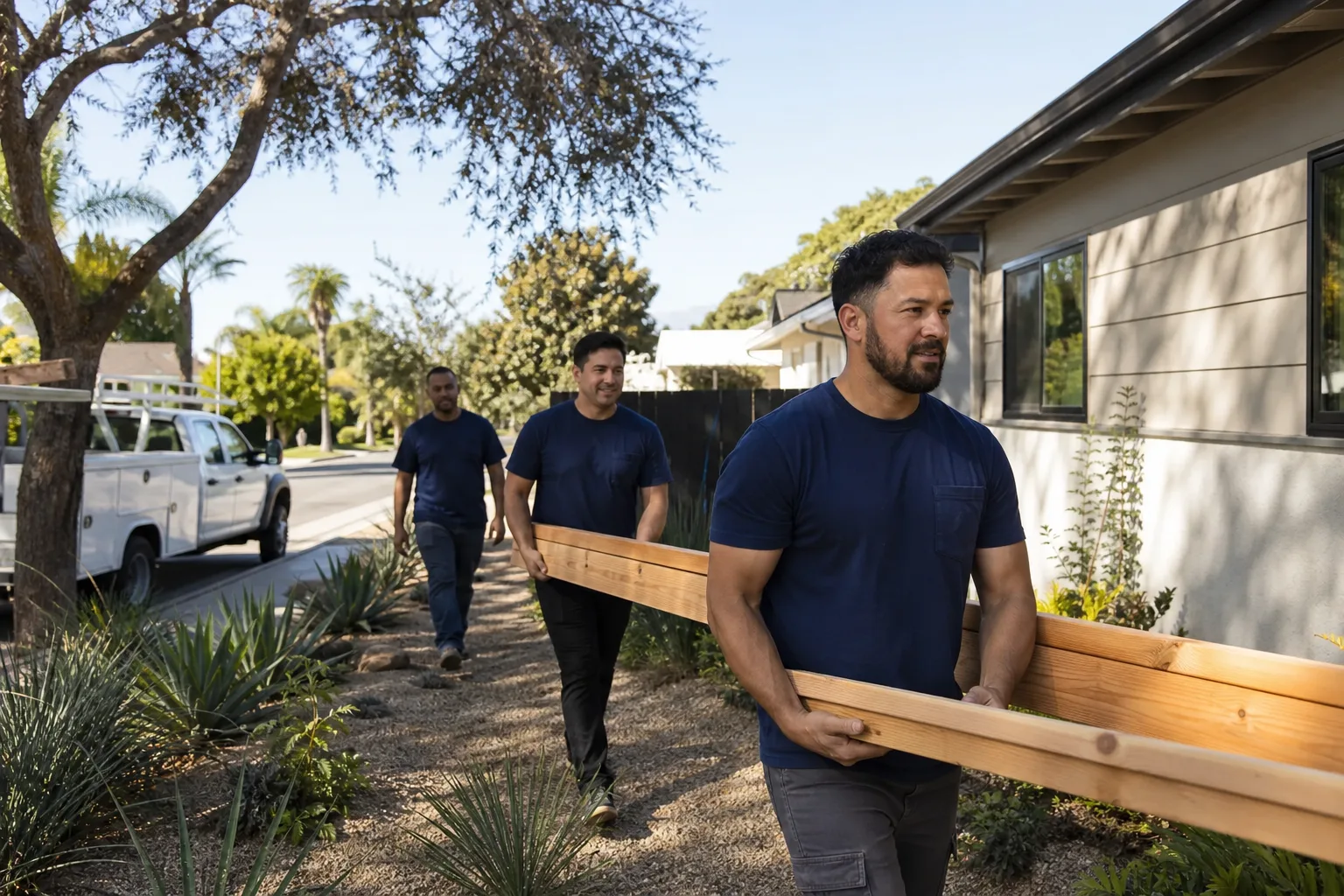
Every contractor says their crew is great. The question that separates a real operation from a risky one is simple: can they tell you who’s coming before they come? If the answer is “some guys in a white truck,” you have no way to verify who is on your property, and no way to hold the contractor accountable if something goes wrong.
For homeowners who are often home alone, parents with young children, or older homeowners, this isn’t a minor inconvenience. It’s a security question. So here’s what crew verification should actually look like in practice:
- Name and photo before arrival. You receive the assigned technician’s name and a headshot, in writing, before the first visit.
- Photo ID badge at the door. The technician presents a badge that matches the person on the paperwork. Every visit, not just the first one.
- Background check and identity verification. The contractor should be able to tell you these were completed before the crew was assigned.
- Clean, marked uniform. Not a personal vehicle and a t-shirt with a logo slapped on it.
- Consistent naming. The person who shows up on day one is the same person on day forty-five.
The Threshold Standard, which governs Sutton ADU Builders Summerlin crews, requires all of the above. When we write that into a Summerlin project, it’s not a marketing line. It’s a checklist the field supervisor signs off on for each visit. If a contractor you’re interviewing can’t articulate the equivalent, ask why. When you’re hiring a room addition contractor in Summerlin, the crew verification question is one of the first five you should ask.
The Scope Document Test: Specification vs. Category
The single fastest way to tell a real bid from a placeholder bid is to look at how materials are listed. A trustworthy room addition bid uses specifications. A risky bid uses categories. The difference looks like this:
- Category: “Flooring – per plan” or “Flooring allowance: $4/sq ft”
- Specification: “Flooring: 6″ x 36″ porcelain tile, rectified edge, desert-rated frost resistant (specific manufacturer and SKU listed), installed over 1/4″ cement backer board”
Why does the difference matter so much? Because the category wording leaves the door open for scope creep. If the bid says “flooring allowance,” any change lands on your invoice. If it says “specific tile, specific underlayment, specific brand,” you know what you’re getting and the change-order risk drops dramatically.
The scope document test on a Summerlin room addition also needs to cover:
- Exterior cladding: brand and product line (not “stucco” – the specific stucco system and the specific manufacturer)
- Windows and doors: brand, model, and U-factor (Summerlin’s desert climate and HOA design standards both matter here)
- Insulation: R-value and material
- HVAC extension: whether the existing unit can be extended or a new mini-split is required, specified
- Roof tie-in: manufacturer and product line for the roof material, and how the new roof ties into the existing structure
- Permit and inspection fees: called out as a line item, not folded into an allowance
When the bid lists categories instead of specifications, that’s the sign you’re most likely to see a change-order surprise mid-project. When it lists specifications, you know exactly what you’re buying. If a contractor can’t tell you the difference between a category and a specification without looking it up, that’s a warning sign too.
Insurance Certificates: What Additional Insured Actually Means
Every contractor claims to be insured. The detail that matters most is one almost no homeowner asks about: does the general liability certificate name you (or your trust, or your property) as an additional insured for the duration of the project?
Here’s the plain-English version. A general liability policy covers the contractor’s business. If a worker is injured on your property, or an uninsured subcontractor damages a neighbor’s fence, who pays depends on how the policy and the contract are structured. If you’re listed as additional insured, your property is covered under the contractor’s policy for the duration of the project. If you’re not listed, you may be exposed.
So the vetting steps are:
- Ask for the certificate of general liability insurance and the certificate of workers’ compensation insurance.
- Verify the policy dates cover your entire project, not just the start date.
- Verify the certificate names you (or your ownership entity) as additional insured.
- Call the insurance carrier’s certificate verification line listed on the document. Don’t just trust the PDF the contractor emailed.
- Confirm the general liability limit is proportionate to the size of your Summerlin addition. A $1 million policy on a $300,000 room addition is worth a conversation about whether $2 million makes sense.
When we quote on a home addition, we include the insurance documentation packet with the bid, not after it. There’s no reason to be cagey about it. If a contractor gets defensive when you ask for certificates, that’s a signal. A home addition contractor in Summerlin should hand you this paperwork before you sign anything.
The Post-Completion Abandonment Pattern
One of the most common failures on a room addition isn’t an injury or a permit problem. It’s a contractor who finishes the job, collects the final payment, and then disappears. Six months later the drywall shows a crack along the seam, or the roof tie-in leaks during the first monsoon, or the exterior stucco develops a hairline crack, and the phone number goes to voicemail. That’s the post-completion abandonment pattern.
It happens because the contractor’s relationship with you effectively ends at final payment. Once the money is in, the incentive to come back for a callback drops to zero. And without a written guarantee, there’s no mechanism to force the issue that doesn’t involve small claims court.
A written, named guarantee changes the dynamic. The 365-Day Done Right Promise from Sutton ADU Builders Summerlin, for example, covers defects in workmanship for one full calendar year from project completion. The company is on the hook, in writing, for that full year – and the promise is baked into the contract, not a verbal assurance. If a repair or element of the build fails during that year, a second visit is included, free. That’s a very different relationship than “call us if you have a problem,” and it’s the kind of documentation you should require of any room addition contractor you’re considering.
The question to ask a contractor whose bid is otherwise appealing: “What’s the written guarantee, and what does it actually cover?” If the answer is a verbal “we stand behind our work,” that’s not a guarantee. It’s a phrase.
Summerlin-Specific Red Flags
Room additions in Summerlin come with a set of local complications that a contractor unfamiliar with the area will underestimate – and that undercount is itself a warning sign. The four we see most often:
- HOA design review. Most Summerlin communities require HOA architectural review before a room addition permit is submitted. A contractor who says “we’ll start framing next week” without mentioning the design review committee is either skipping a step or unfamiliar with how Summerlin works. The review can take 4 – 8 weeks depending on the association.
- Desert-rated materials. Summerlin’s summer heat and intense UV light push materials harder than most of the country. Exterior products that hold up in coastal climates can chalk, blister, or fade here in two summers. A bid that doesn’t specify UV- and heat-rated cladding and window systems is a bid you’ll be correcting in year three.
- Stucco and cladding systems. James Hardie fiber cement and the specific stucco assemblies used in Summerlin homes require specific flashing details. A contractor who “does stucco” without knowing the local assembly details is one monsoon away from a wall problem.
- Lot and grade specifics. Summerlin has plenty of lots with grade changes, retention walls, and tight side-yard access. A contractor who hasn’t walked the lot and addressed those constraints in the bid isn’t really bidding your project – they’re bidding a generic one.
If you’re working with a prefab or modular ADU brand from the Dvele, Mighty Buildings, or Abodu product lines, the Summerlin context is even more important because the site work is where most of the local expertise has to live. The same applies to a detached ADU builder in Summerlin or a garage conversion specialist. The brand brochure is not the local bid.
How to Vet a Room Addition Contractor: A 7-Step Checklist
If you only remember one section of this guide, remember this one. Print it out and go through it before you sign anything.
- Verify the license directly with the Nevada State Contractors Board. Look up the license number, confirm the classification matches the work (residential vs. general), and check for disciplinary history. A contractor who won’t give you the license number is a contractor to skip.
- Ask for the payment schedule in writing. The deposit should not exceed 10% or $1,000 (whichever is less). Every stage draw should be tied to a milestone.
- Read the scope document for specifications. Materials by brand and model, not by category. Allowances called out explicitly.
- Get the insurance certificates. General liability and workers’ comp. Additional insured naming you. Verified with the carrier.
- Ask about crew verification. Names, photos, and badges should be standard, not a special request.
- Confirm the post-completion guarantee in writing. The duration, what’s covered, and how a callback works.
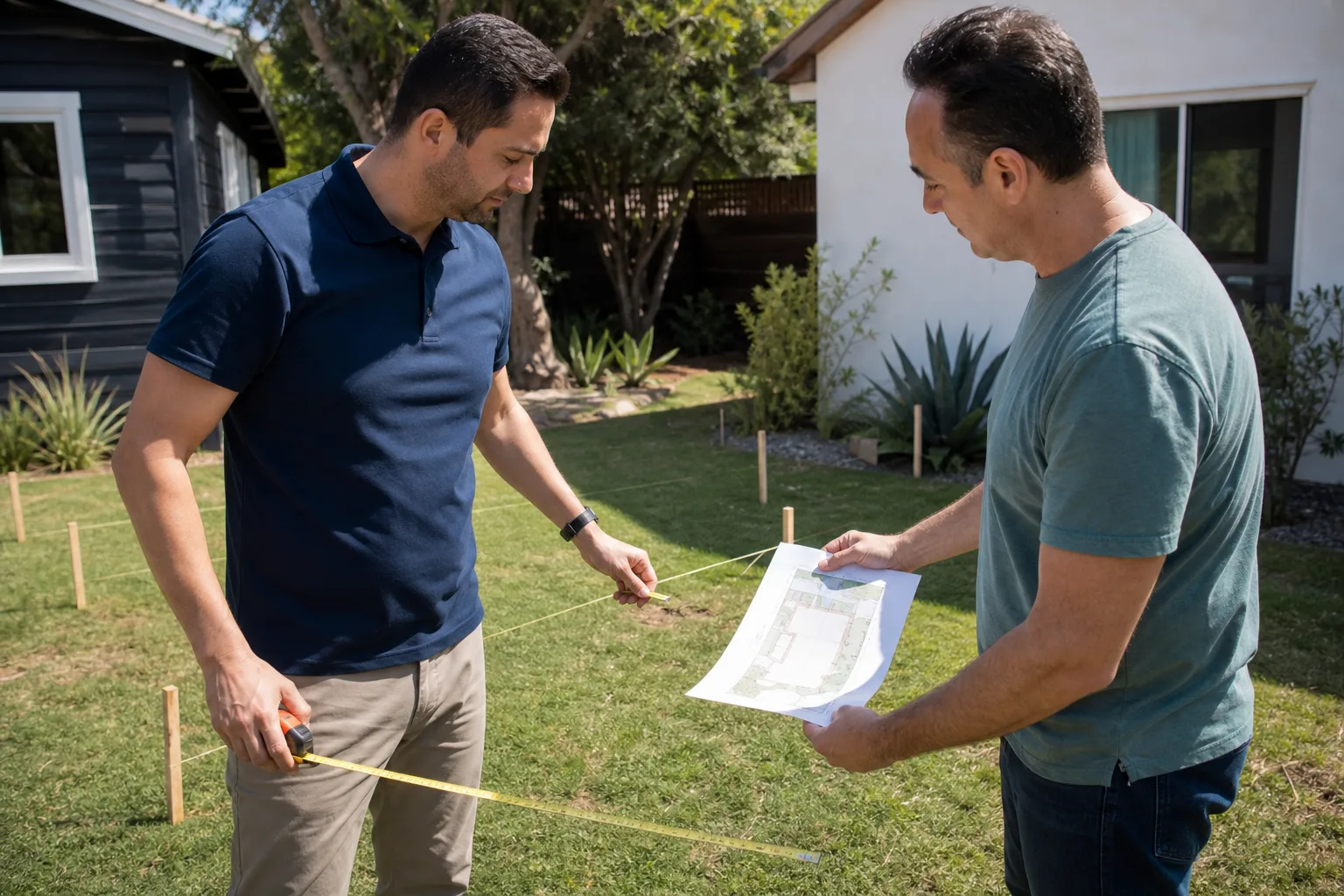
- Walk your lot with the contractor. The bid should reference site-specific constraints, existing structures, and access. If the contractor didn’t walk the lot, they didn’t bid the project.
Take that list to every bid on a Sutton ADU Builders Summerlin home project and to every comparison shop for a Summerlin room addition. It’s the same list we hold our own crews to, and it’s the same list the Nevada Contractors Board would use if a complaint were filed. If a contractor balks at any item, that’s the answer.
License and Permit Verification Without Guesswork
Two verification steps are worth doing on your own, and neither takes more than ten minutes.
License verification. The Nevada State Contractors Board has an online license lookup. Enter the license number or the company name. Confirm the classification (residential remodelers and general contractors carry different classifications), the license status, the expiration date, and whether there’s any disciplinary history. Screenshot the result and keep it with your contract paperwork.
Permit verification. Every room addition in Summerlin requires a building permit from Clark County or the City of Las Vegas, depending on the specific parcel. Ask the contractor for the permit application number before work starts. Then look it up on the jurisdiction’s permit portal. You want to see: the permit is issued in your name as the property owner (or with your written authorization), the scope matches your contract, and inspections are scheduled at the correct stages (footing, framing, dry-in, final).
A contractor who pushes back on permit verification – “we’ll pull it after we start, we don’t want the inspectors in the way yet” – is telling you something. Without a permit, your project can’t pass final inspection, which means you can’t get a certificate of occupancy, which means the addition isn’t legally habitable. The risk is entirely yours, not the contractor’s.
Common Mistakes to Avoid
- Choosing on price alone. The lowest of three bids is often the one with the most allowances and the least documentation. Compare the specifications side by side, not just the total.
- Skipping the HOA review on a Summerlin project. Framing before HOA design approval is a fast path to a stop-work order and a costly delay.
- Handing over a large deposit “to hold the schedule.” No legitimate Nevada contractor needs more than 10% up front. Schedule pressure is a sales tactic, not a legal requirement.
- Not naming an additional insured on the insurance certificate. A certificate that names the contractor but not you doesn’t protect your property if a worker is hurt on your lot.
- Accepting a verbal guarantee. “We stand behind our work” is not a guarantee. A written guarantee names the coverage period and the process for a callback.
- Letting the crew start without photo ID badges. In Summerlin, where homeowners are often home alone during the build, crew verification should be standard, not requested.
- Not photographing the pre-existing condition of the property. Take date-stamped photos of the lot, the existing walls, and the neighboring structures before day one. If a dispute arises later, the record saves weeks of argument.
When to Call a Professional
Call a licensed room addition contractor if any of these are true: you’re planning any structural change to your home, you need to add habitable square footage, you’re converting a garage to living space, you’re building a detached ADU, or you’re being asked for a deposit you’re not comfortable with. Structural work is not a homeowner-DIY category – load paths, tie-ins to existing framing, and permit inspections all require licensed trade work. In Summerlin, the HOA review and the desert-specific material requirements add another layer that a general handyman can’t carry. Sutton ADU Builders Summerlin offers free estimates in Summerlin – call (833) 355-2818. Every project comes with a written price before work begins, a 365-Day Done Right Promise on workmanship, and Threshold Verified crews whose names and photos reach you before they reach your door. When a repair or element fails within the first year, a second visit is included, free.
Frequently Asked Questions
A deposit demand greater than 10% of the contract price (or $1,000, whichever is less) before work begins is the biggest single warning sign. It’s a violation of Nevada contractor law and one of the strongest predictors of a project that stalls or disappears during construction. Call (833) 355-2818 for a free estimate with a written, staged payment schedule.
Nevada law caps the down payment at 10% of the contract price or $1,000, whichever is less, before work starts. Any contractor asking for more – even with a confident explanation about material costs – is out of compliance. Call (833) 355-2818 to talk through a written payment schedule for your Summerlin project.
Ask for the assigned technician’s name and photo before arrival, require a photo ID badge at the door, and confirm background checks and identity verification were completed. The Threshold Standard requires all three on every visit. Call (833) 355-2818 for a free estimate at a Summerlin home.
Yes – your contractor’s general liability certificate should name you (or your property ownership entity) as an additional insured for the duration of the project. Without that designation, you may have exposure if a worker is injured on your property. Call (833) 355-2818 for a free estimate and a full insurance documentation packet.
A written guarantee should specify the coverage period and what counts as a defect in workmanship. The 365-Day Done Right Promise covers workmanship for one full calendar year from project completion, and a second visit is included, free, if any element of the build fails. Call (833) 355-2818 for a free estimate.
A typical Summerlin room addition runs six to nine months from permit submission to final inspection, with HOA design review adding 4 – 8 weeks ahead of the permit timeline. Contractors who quote faster timelines usually have not accounted for HOA review or county inspection schedules. Call (833) 355-2818 for a realistic project timeline on your free estimate.
The Bottom Line
The warning signs that actually predict a bad room addition outcome aren’t about price. They’re about process: a deposit above Nevada’s 10% cap, a bid that lists categories instead of specifications, a crew you can’t verify, an insurance certificate that doesn’t name you, and no written guarantee after the final payment. If you remember nothing else from this guide, remember that any one of those signs justifies a second conversation, and two or more justifies walking away. Summerlin room additions are structural, expensive, and long – a contractor who answers the process questions cleanly is the one to hire. Call (833) 355-2818 for a free estimate from Sutton ADU Builders Summerlin; every project starts with a written price, a Threshold Verified crew, and the 365-Day Done Right Promise.
Written by the team at Sutton ADU Builders Summerlin.