Tuff Shed Site Prep & Utilities: The Summerlin Owner’s Guide
Site prep and utility work for a Tuff Shed in Summerlin generally runs $2,400 – $9,800 for a standard 8×10 to 12×16 shed, covering pad or pier foundation, trenching, electrical conduit, and inspection coordination. Larger structures, long utility runs, or rocky caliche digging push it higher. We’re an independent contractor and not affiliated with Tuff Shed, but site preparation is the work we do every week.
Owners usually find the problem the hard way. The shed floor feels a little springy. A door that used to close clean now drags on the threshold. Water pools at one corner after a monsoon. Or the electrician comes out to run power and tells you the ground is too uneven, the soil is wrong, or the run is too far for the panel. Any of those means it’s time to look at the prep underneath, not the shed itself. Call (833) 355-2818 for a free estimate.
Which Tuff Shed Models This Applies To
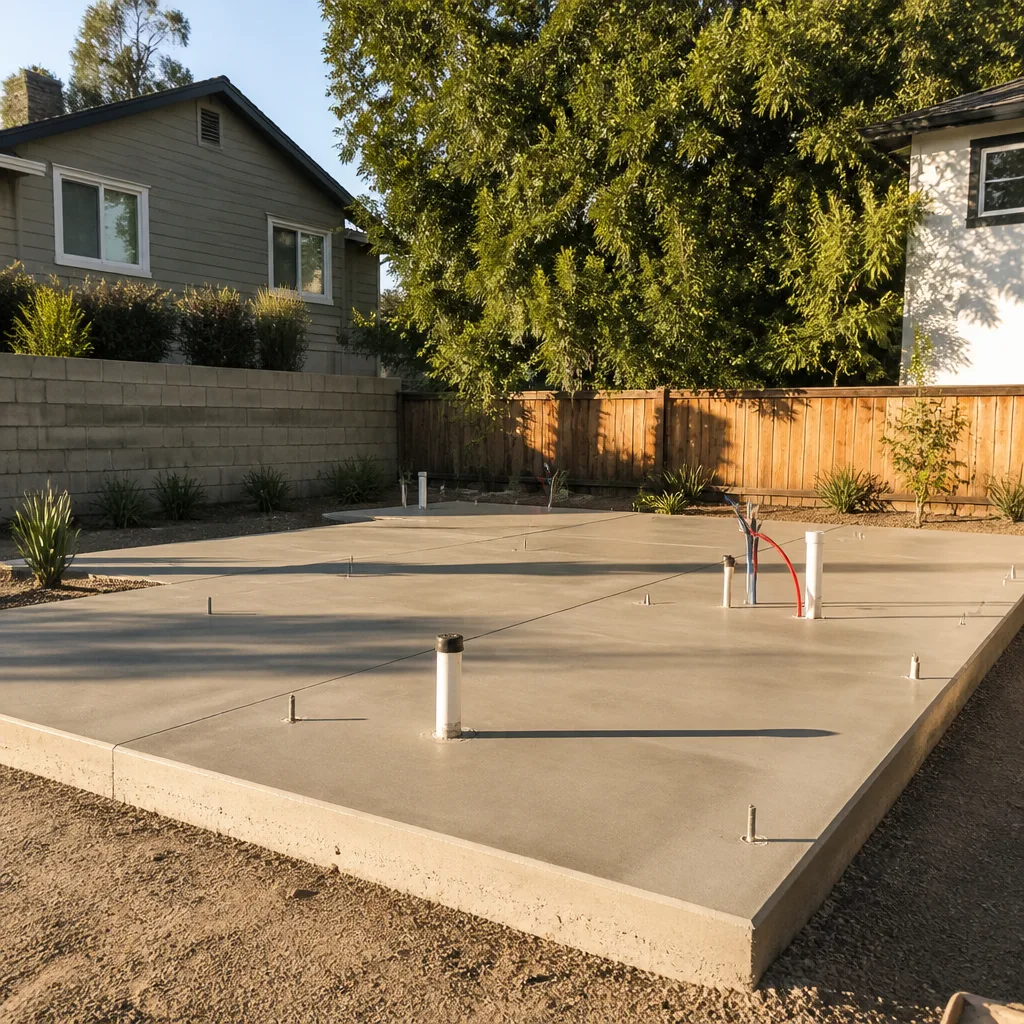
Site prep isn’t a part stamped with a model number the way a door hinge is. It’s the foundation, drainage and utility work sized to your structure. What does change by model is the load and the footprint. Tuff Shed’s smaller utility lines (roughly 8×8 to 10×12) sit comfortably on a prepped gravel pad or a set of concrete piers. Their larger Premier and cabin-style buildings, and especially anything you’re converting toward living or studio space, need a poured slab or a properly engineered pier grid, because the weight and the snow-and-wind rating change what the ground has to carry.
To identify what you’re working with, measure the actual outside footprint, not the nominal size (an 8×10 is usually a few inches wider than 8 feet across). Check the building’s data plate or the paperwork for the model name and, if it was a conversion, the intended use. That tells us whether you need a pad, a slab, or piers.
On OEM versus aftermarket: Tuff Shed can supply a pad kit or a recommended foundation approach through their dealer. That’s fine if your lot is flat and dry. Most Summerlin lots aren’t perfectly either. A local contractor will size the base and drainage to your actual grade, pull the right permits, and build the utility run to the panel. That’s where the real money sits, and it’s the part a prefab kit won’t solve for you.
Signs Your Tuff Shed Site Prep & Utilities Is Failing
Five symptoms Summerlin owners describe, and what’s usually behind each:
- The floor feels spongy or the building rocks when you walk in. The pad has settled unevenly or the piers have shifted. In Summerlin’s caliche-heavy soil, water that doesn’t drain off the base erodes the fines under the pad and leaves voids.
- A door or window drags, or the walls go out of square. The structure is twisting because the foundation isn’t level or is moving seasonally. That’s a base problem showing up as a shed problem.
- Water pools at one corner after rain or during monsoon season. The pad or slab was built without enough slope, or the grading pushes runoff back toward the shed. Clark County soils and our short, intense storms don’t forgive bad drainage.
- The shed stays too hot to use, or the electrical run keeps tripping. Poor ventilation, no insulation, undersized conduit, or a run that was never permitted. A shed that gets direct afternoon sun without proper prep and wiring bakes inside.
- You can see cracks in the slab or gaps where the shed meets the base. Movement in the soil or a slab poured too thin for the load. Left alone, it spreads and the whole structure gets harder and costlier to correct.
Replacement Cost & What’s Included
Installed site prep and utility work for a Summerlin Tuff Shed typically lands in these ranges. Every quote we give is written and line-itemed before any work starts.
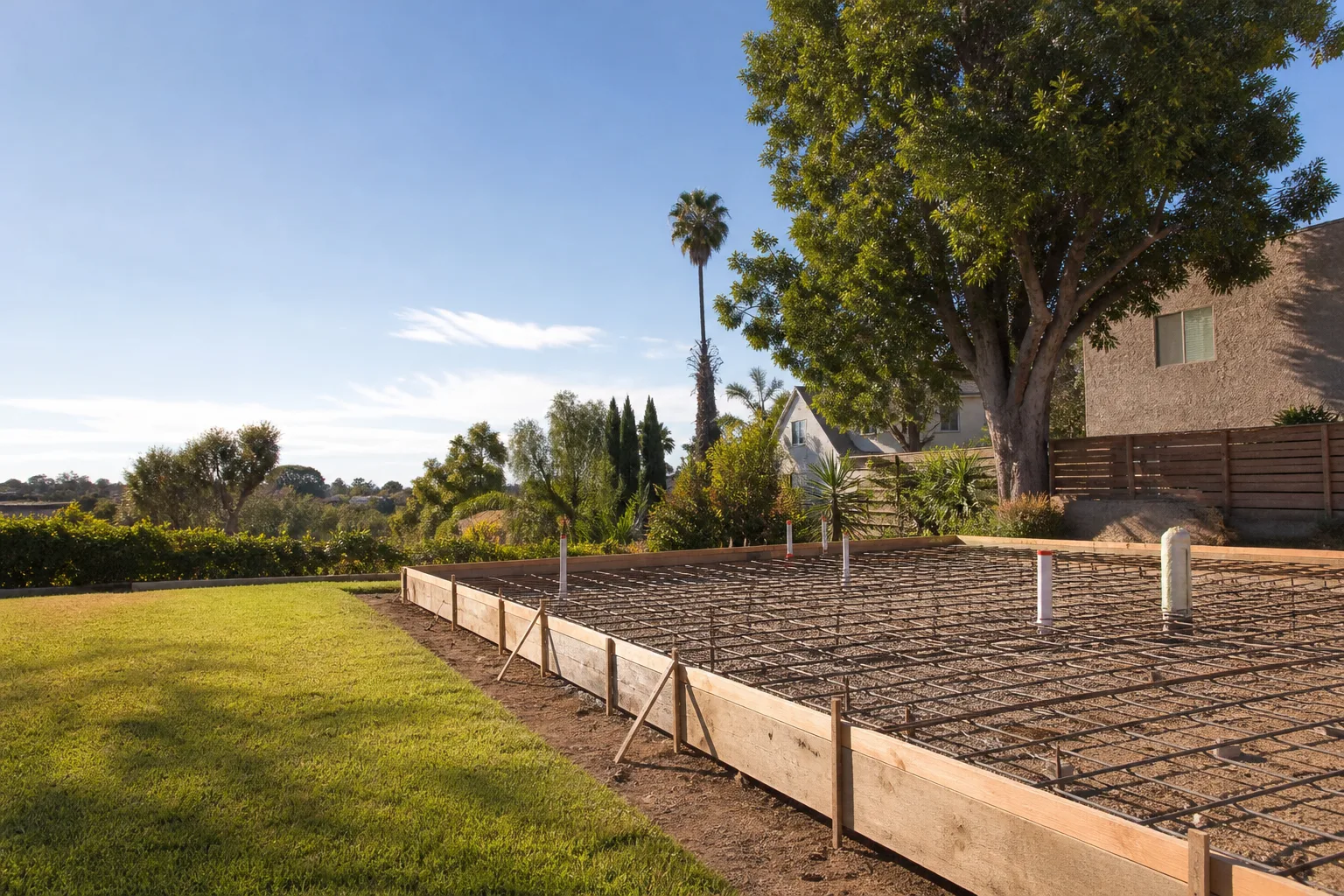
- Gravel pad with proper base and drainage: $2,400 – $4,200. Includes excavation, compacted base, grading away from the shed, and cleanup.
- Concrete pier grid for a level building: $3,800 – $6,500. Sized to your footprint, set below frost-level concerns and bearing on solid ground.
- Poured slab for a larger or heavier structure: $5,500 – $9,800. Thickness and rebar sized to the load, with vapor barrier and finish.
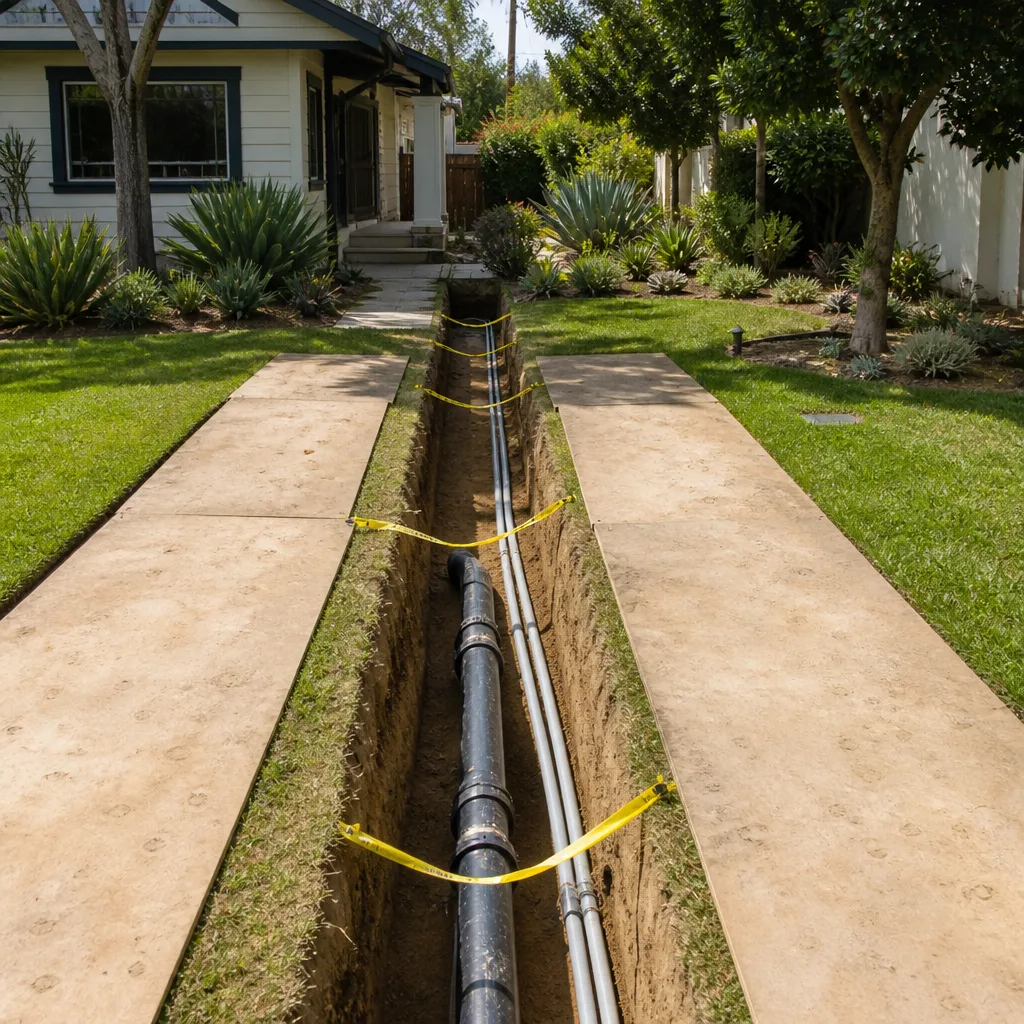
- Electrical trenching and conduit run: $1,100 – $3,400, depending on distance to the panel and whether you want subpanel capacity.
- Permits and inspection coordination: quoted separately, at cost. We pull them, schedule them, and pass them.
What drives the range: distance the trench has to travel, rock (caliche digs differently than clean soil), whether the panel has room, and grade. There are no change orders slipped onto the bill after the fact. Every project carries the 365-Day Done Right Promise, which covers defects in workmanship for one full calendar year from completion. If something fails, our second visit is free.
DIY or Call Us?
Some of this you can check safely. Walk the perimeter after a rain and see where water goes. Put a level on the floor and check the pad isn’t hollow with a tap test. Read the paperwork to confirm your model and footprint, and look at your panel for open breaker spaces. Those checks are free and tell you a lot.
Where DIY goes wrong: trenching and electrical. Running conduit to a shed touches code depth requirements, grounding, and the sizing of the run, and an inspection failure from a homeowner-run trench is common and costly to redo. Concrete and pier work also depend on soil and load in ways that are hard to eyeball, and a slab that looks fine for a season can crack the next. If your building is going to carry real weight or be used as living or studio space, get it engineered and inspected. Call (833) 355-2818 and we’ll tell you straight whether your lot needs a pad, piers or a slab, free.
FAQs
How long should site prep for a Tuff Shed last in Summerlin? A properly built pad or slab should hold up well over a decade, and often much longer. What shortens it is drainage and sun. Summerlin’s intense summer heat and monsoon runoff do the most damage to bases that don’t shed water and to sheds with no ventilation. Get the grading and ventilation right and the prep lasts.
Can the foundation be repaired instead of rebuilt? Often yes. If the pad has settled but isn’t cracked, we can lift and re-level or add piers. If the slab is cracked through or the pad is eroded underneath, replacement is the honest answer. Call (833) 355-2818 for a free look so you know which you’re facing.
How long does the job take? A gravel pad is usually done in a day. A pier grid runs a day or two plus concrete cure time. A slab is poured and then needs curing before the shed goes on it, so plan a few days end to end. Electrical trenching adds a day or two depending on the run.
How do you source the parts? For anything Tuff Shed-specific (a pad kit, matching anchors), we source through Tuff Shed’s channels. For concrete, electrical components and site materials, we use local supplier stock matched to your structure. We don’t carry parts on a truck and we don’t claim stock; we bring what your specific job needs. Our technicians have up to 20 years of experience, and every one is background-checked, identity-verified and photo-badged under the Threshold Standard, with their name and photo sent to you before arrival.
Sutton ADU Builders Summerlin also works with prefab and modular lines including Abodu, Cover and Dvele, and handles Tuff Shed conversions and James Hardie exterior systems. We’re an independent contractor, not affiliated with Tuff Shed. If you’re ready to price the job with a written number in hand, call (833) 355-2818 for a free estimate.
Written by the team at Sutton ADU Builders Summerlin, serving Summerlin and nearby areas.