Last updated November 17, 2026
Home Addition Contractor Warning Signs Every Homeowner Should Know
The most dangerous contractor in a Summerlin neighborhood right now almost certainly has a valid Nevada license. That’s the uncomfortable part. A license proves someone passed an exam and paid a fee – it doesn’t prove they’ll write a fair change order, tell you who’s actually swinging the hammer, or pick up the phone when a window leaks in month three. The warning signs that actually protect you aren’t the obvious ones like “no license.” They show up in the first meeting and the first document, before any money changes hands. This guide teaches you to read the contractor, not just the paperwork – the contract clauses, the estimate-room behavior, the complaint history, and the crew-identity problem nobody warns you about.
Quick Answer
The real warning signs of a bad home addition contractor are behavioral and contractual, not just licensing: they discourage you from getting competing bids, can’t name their subcontractors, ask for more than 10% before permits are approved, hand you change-order clauses and allowance line items that quietly shift cost risk to you, and can’t tell you who will physically show up at your door. A clean license is the minimum. How they behave in the first meeting and how their contract reads is what tells you whether to sign.
Table of Contents
- Why a Clean License Isn’t Enough
- Five Contract Red Flags Licensed Contractors Still Use
- Behavioral Warning Signs in the Estimate Meeting
- How to Verify Complaint History, Not Just License Status
- The Crew-Identity Problem Nobody Warns You About
- What a Real Written Price Guarantee Covers
- Summerlin-Specific Red Flags
- Common Mistakes to Avoid
- When to Call a Professional
Why a Clean License Isn’t Enough
Nevada requires a contractor license for any addition over $1,000 in labor and materials, and the home addition contractor in Summerlin you’re interviewing should have an active one in the residential classification. Check it. But understand what the check tells you: it confirms the license exists, the bond is current, and no formal discipline is on record. It says nothing about whether the contract they hand you is written in their favor.
In our experience across Summerlin projects, the disputes that hurt homeowners most start with paperwork they signed without reading closely. A licensed contractor with a bad contract is not a safer bet than an unlicensed one with a good contract – both leave you exposed, just through different doors.
Summerlin adds its own layer. Many neighborhoods here sit under HOA architectural review, and a contractor who doesn’t know the difference between a Clark County permit and an HOA design review has already shown you they’ll cut corners where it’s inconvenient. A good contractor expects the review. A warning-sign contractor grumbles about it and tells you “we can probably skip that.”
What the license check actually confirms
- Active status and correct residential classification
- Current bond and no expired insurance on file
- Formal discipline, if any, on the public record
What it does not confirm: contract fairness, crew identity, subcontractor quality, or whether they’ll answer the phone after final payment. That’s the gap this guide fills.
Five Contract Red Flags Licensed Contractors Still Use
The contract is where most of the danger hides, and the worst clauses are perfectly legal. Read every addition contract for these five before you sign anything.
- Unsigned change-order clauses. The worst version lets the contractor make “necessary adjustments” without your written approval and bill you later. Any legitimate change – a framing adjustment, an upgraded window package – should require your signature before work proceeds. If the clause lets them proceed on a verbal okay, cross it out.
- Lien waivers that only protect them. A lien waiver should protect you from a subcontractor placing a mechanic’s lien on your home for unpaid work. Red-flag contracts include waivers that shield the contractor from liability while leaving you exposed. Ask directly: “If your framer doesn’t get paid, does a lien land on my house?”
- Vague completion definitions. “Substantial completion” and “final completion” should be defined with specific milestones – final inspection passed, punch list closed, lien releases delivered. A contract that never defines when the job is “done” lets them call it finished whenever they want final payment.
- Warranty exclusions that swallow the warranty. Many warranties look generous until the exclusions list runs two paragraphs. Common swallowers: “normal settling,” “weather-related movement,” “owner-supplied materials,” and “issues arising from site conditions.” In a desert climate, “settling” is the excuse that voids almost everything.
- Allowance line items that shift cost risk to you. Allowances look like a fixed price but aren’t. “Tile allowance: $6/sq ft” means any tile above that number is your bill, often at inflated markups. Read every allowance and ask for the actual selections before you sign.
For a deeper look at how additions are priced in Summerlin specifically, see our guide to the room addition contractor in Summerlin process. Written line-item pricing is the core fix for most of these clauses – and it’s why we put a written price in front of every homeowner before work begins.
Behavioral Warning Signs in the Estimate Meeting
The estimate meeting is a live audition. Pay attention to what they do, not what they say. Here are the behavioral signals that should stop you cold.
- They discourage other bids. “You don’t need to shop around, my price is fair.” A confident contractor wants you to compare – it’s how they win on written price. Anyone who pushes you to skip the comparison is worried about the comparison.
- They can’t name their subcontractors. Ask directly: “Who’s doing the framing, the electrical, the drywall?” You should hear names of companies, not “my guys.” If they can’t name them, they don’t know them, and you’re the one who’ll find out the quality of the electrical rough-in the hard way.
- They want more than 10% upfront before permits are approved. A deposit is normal. A large deposit before permits is a cash-flow warning. Permits cost the contractor time and money to pull – if they’re asking you to fund that gap, they may be undercapitalized.
- They can’t answer how long the permits take in Summerlin. A contractor who does additions here regularly knows the Clark County timeline. Guesses and vagueness are the tell.
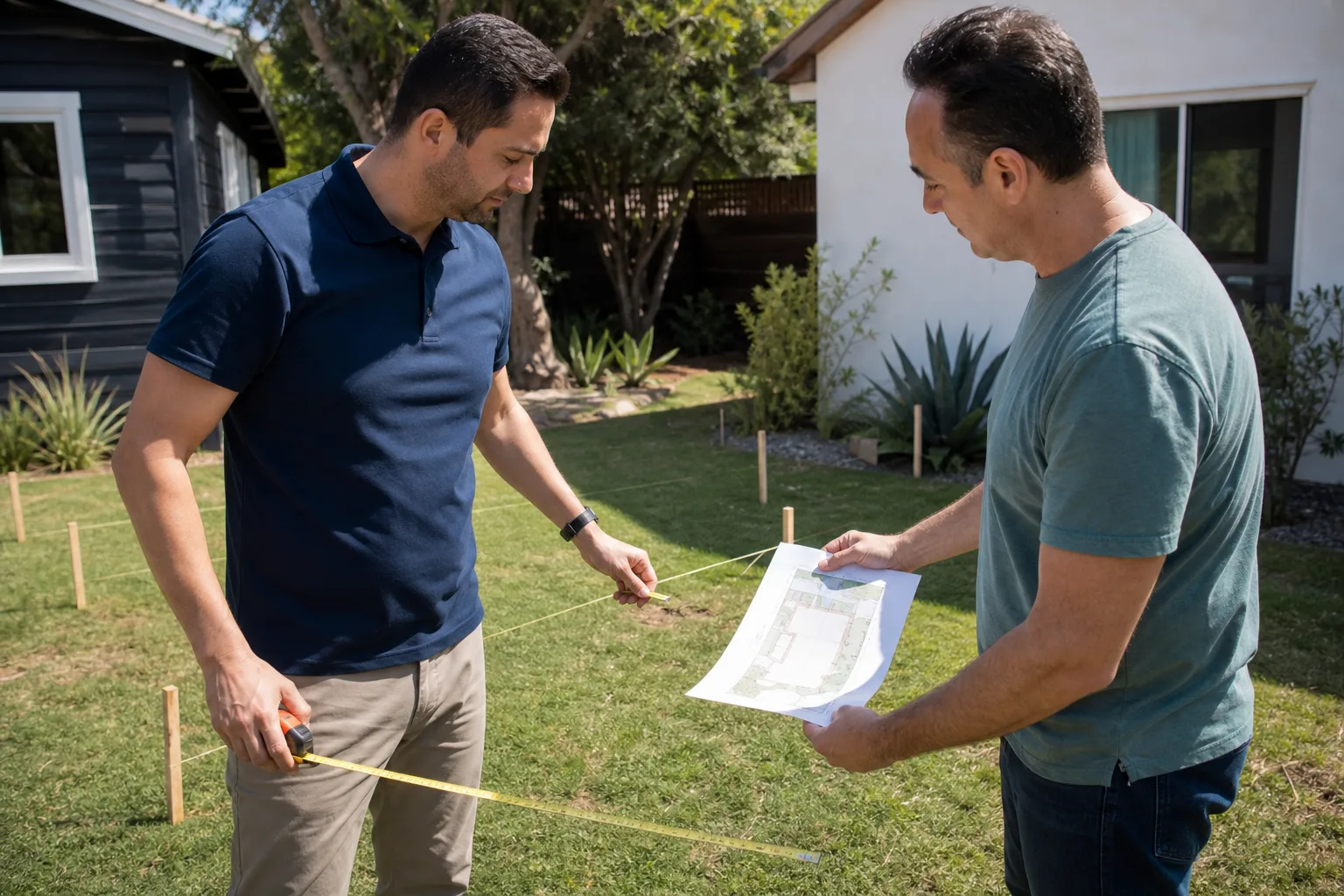
- They talk over the details. The good ones ask questions – about your lot, your HOA, your existing foundation, the slope. If they know your build in ten minutes, they haven’t asked enough to know it.
One counterintuitive signal: a contractor who tells you a project like yours costs more than you expect, and explains why, is usually more trustworthy than one who gives you the number you wanted. Straight pricing is a form of honesty.
How to Verify Complaint History, Not Just License Status
Most homeowners check the license and stop. The complaint record is the second page, and it’s often the more useful one.
Step-by-step: checking the Nevada State Contractors Board
- Go to the Nevada State Contractors Board website and search the contractor by license number or business name.
- Confirm the license status is “active,” the classification matches your project, and the bond and insurance are current.
- Open the complaint history tab. Read the nature of each complaint, the resolution, and the date.
- Look for patterns, not one-offs. Multiple complaints of the same type – nonpayment, incomplete work, defective workmanship – matter far more than a single settled dispute.
- Screenshot the record and ask the contractor about it in the next conversation.
Here’s what “settled” actually means. A settled complaint is not automatically a red flag – many are closed with a reasonable resolution, and busy contractors accumulate the occasional dispute. But the resolution type is the tell. A complaint settled with “agreed to pay restitution” or “agreed to complete work” tells you the board found merit. A batch of those in the last two years tells you the contractor has a habit of needing oversight. Ask the contractor directly: “What happened here?” Their answer – specific and accountable, or vague and defensive – is one of the most revealing moments in the whole vetting process.
The Crew-Identity Problem Nobody Warns You About
You can vet the contractor perfectly and still open the door to a stranger. This is the gap that most warning-signs guides ignore: a contractor with a clean record can send a crew you’ve never met to your property, and you have no way to know who they are unless they tell you in writing.
For families with young children, older homeowners, and anyone home alone during the build, this isn’t a small concern. An addition takes months. The people who show up on day one are the people who’ll be in your yard, your garage, and your living space every weekday for a long stretch. You deserve to know who they are before the first truck pulls up.
The verification you should require in writing:
- Name and photograph of each lead technician before arrival
- Confirmation that every field worker is background-checked and identity-verified
- Photo ID badges checked at the door, not just once but every visit
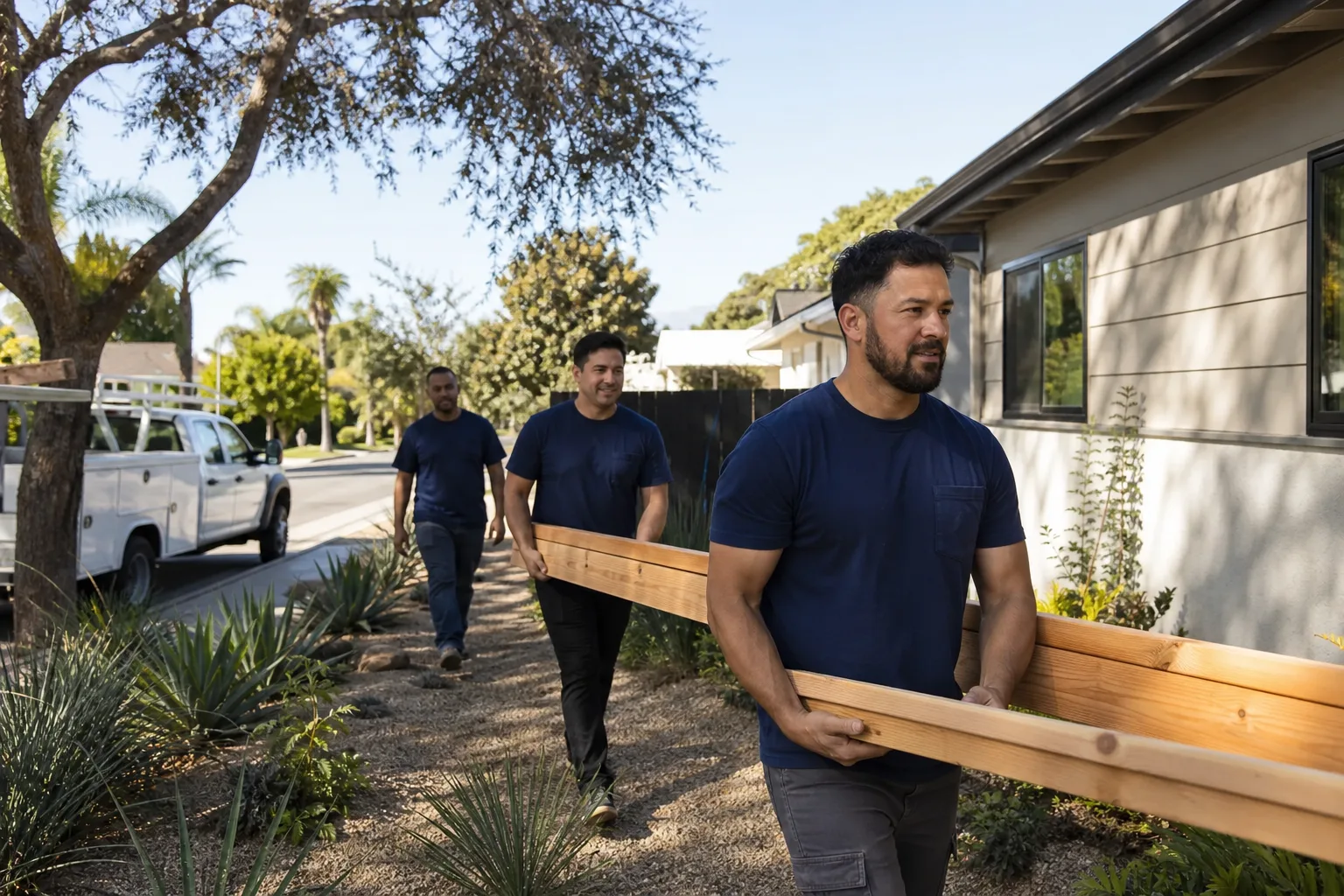
- Marked, uniformed crews so you can tell a real worker from a stranger walking a job site
This is the standard we hold across every ADU builders in Summerlin project: Threshold Verified crews, name and photo to the homeowner before the visit, ID badge at the door. We also work with the major prefab lines – Plant Prefab, Abodu, and Dvele among them – so the crew arriving on your lot knows the product they’re installing, not just the framing. Ask any contractor you interview: “Will you send me the name and photo of everyone who comes to my property?” If the answer is a shrug, you’ve found your warning sign.
What a Real Written Price Guarantee Covers
The difference between a real price guarantee and boilerplate isn’t the words “we guarantee” – it’s who absorbs the cost when reality changes. Here’s how to read the language side by side.
Boilerplate that shifts risk to you
- “Estimate valid for 30 days. Final pricing subject to change based on site conditions.”
- “Owner responsible for all unforeseen costs discovered during construction.”
- “Allowances are estimates only; overages billed at contractor’s current rates.”
- “Additional work approved verbally on site will be added to final invoice.”
Language that protects you
- “Written price locked before work begins. Changes require your signed approval.”
- “Unforeseen conditions handled through a written change order, priced and approved before proceeding.”
- “Allowances applied against actual selections; any overage quoted in writing first.”
- “Workmanship covered for a full year from completion – if it isn’t right, we make it right.”
Our written-price approach is the core fix: every homeowner gets a locked written price before any work starts, and the 365-Day Done Right Promise covers defects in workmanship for one full calendar year from completion. We also include a free second visit if an element of the build fails – no haggling, no fee. Read any addition contract against those two ideas: is the price locked, and does the warranty survive exclusions? If either answer is fuzzy, don’t sign.
Summerlin-Specific Red Flags
Summerlin has features that catch out-of-area contractors, and a contractor who doesn’t know them is a warning sign in itself.
- HOA architectural review. Most Summerlin neighborhoods require design review before certain exterior changes. A contractor who shrugs this off is setting you up for a stop-work order.
- Desert soil and slab conditions. Expansive clay and caliche-shaped soil move with the seasons. Contracts that exclude all “settling” issues in a climate that guarantees some settling are effectively void.
- Monsoon-season water intrusion. Additions that weren’t flashed correctly for the July-to-September storms show up fast. A contractor who treats flashing as an afterthought is a flash point.
- Fast summer curing. Concrete and stucco that set too fast in 105-degree heat crack. Ask how they schedule pours and curing.
- Setback compliance. A setback is the required gap between your new structure and the property line. A contractor who suggests you “probably won’t get caught” on a setback is telling you exactly how they treat code.
If you want to understand how these local conditions affect your specific lot, the Sutton ADU Builders Summerlin home page lays out how we approach Summerlin projects from first site visit to final inspection.
Common Mistakes to Avoid
- Treating the license check as the finish line. It’s the starting gun. The contract and the crew-identity verification do more to protect you than the license search ever will.
- Signing a contract with allowance line items you haven’t seen selections for. Ask for the actual tile, the actual fixtures, the actual garage door model. A $6/sq ft allowance on a Summerlin kitchen you later upgrade to $14 tile is a $10,000 surprise.
- Not asking “who will be at my property.” In a months-long addition, the crew identity is a security question, not a formality. Require names and photos in writing before day one.
- Choosing the lowest bid without checking complaint history. The lowest number is often the one with the softest completion clause and the shortest warranty. Verify the record before you compare the price.
- Skipping the HOA design review. Summerlin HOAs are strict, and a stop-work order mid-build can cost you months. Confirm the review process in writing before construction starts.
- Ignoring verbal change approvals. A verbal “go ahead” on a small adjustment is how surprise invoices start. Every change gets a written change order, signed before work proceeds.
- Not reading the warranty exclusions. The warranty you’re paying for is only as good as what it leaves out. Read every exclusion line and ask the contractor to explain each one in plain English.
When to Call a Professional
Some situations call for a professional assessment before you sign anything. Call us if you’re mid-vetting and stuck: a contract with a change-order clause you can’t read, a complaint history with a pattern you don’t understand, or a contractor who won’t commit to crew verification in writing. Call us if you’re early in planning and want a real summerlin cost range before you compare bids – a written locked price is the best comparison tool you’ll ever have. And call us if a contractor in Summerlin is already on your project and the current one is failing: we’ve walked homeowners through recovery from a bad build more than once. Sutton ADU Builders Summerlin offers free estimates across Summerlin – call (833) 355-2818 and we’ll give you a straight answer, even if it’s “don’t sign that contract.”
Frequently Asked Questions

The biggest signs are behavioral and contractual: discouraging competing bids, inability to name subcontractors, asking for more than 10% before permits, and contract clauses that shift risk to you (unsigned change orders, vague completion definitions, allowances, warranty exclusions). A license check is necessary but nowhere near sufficient. Read the contract and the crew-verification policy as carefully as the license.
Most room additions in Summerlin run roughly $250 to $450 per square foot depending on complexity, finishes, and site work, with detached ADUs in a typical size range running $180,000 to $320,000 before site work. Get a written line-item price before signing. Call (833) 355-2818 for an exact quote – estimates are free.
It can if the contract says it can. A contract with “estimate subject to change” language and generous allowances shifts cost risk to you. A written locked price with a signed change-order process for real changes is the protection you want. Ask any contractor to show you, in writing, exactly which conditions allow the price to move.
A legitimate addition contractor should pull the permits as part of the job – it’s their responsibility, not yours. Ask directly and confirm it in the contract. In Summerlin, ask whether the scope also requires HOA architectural review, and who handles that submission. A contractor who hesitates on permits or the HOA process is showing you a warning sign before the first nail is driven.
Most Summerlin room additions run three to six months from permit approval to final inspection, depending on scope, HOA review timing, and material lead times. Ask your contractor for a written schedule with milestones and their process for delays. Prefab ADU lines like Plant Prefab and Abodu can shorten the build window, so it’s worth asking which approach fits your lot and timeline.
Require the name and photo of each lead technician before arrival, confirmation that every field worker is background-checked and identity-verified, and photo ID badges checked at the door on every visit. Marked, uniformed crews round it out. This is a security concern for anyone home alone during a months-long build, and it’s a legitimate ask of any contractor. Ask the question in the estimate meeting and see how they respond.
The Bottom Line
A valid Nevada license is the floor, not the ceiling. The warning signs that actually protect you are behavioral and contractual: a contractor who discourages other bids, can’t name their subs, wants a fat deposit before permits, hides risk in unsigned change orders and allowances, or won’t tell you who’s coming to your property. Verify the complaint record on the Nevada State Contractors Board. Read every warranty exclusion. And require crew identity in writing before day one. Do those four things and you’ll see a bad contractor – or a good one – clearly. For a straight answer on your specific Summerlin project, call Sutton ADU Builders Summerlin at (833) 355-2818 for a free estimate.
Written by the team at Sutton ADU Builders Summerlin.