Last updated November 17, 2026
How to Hire an ADU Contractor in Summerlin: A Step-by-Step Guide
Of the three quotes you’ll collect from ADU contractors, two of them will likely be allowance-based estimates, meaning the price can legally change once demolition starts. That’s not a knock on the contractors; it’s how most bids are written, with line items like “electrical: $15,000 (allowance)” that move the moment the drywall comes down and a surprise is found. The number at the bottom of the page looks fixed. It usually isn’t. This guide teaches you something more useful than a negotiation script: how to read what’s actually inside the document you’re about to sign.
You’ll learn the five clauses that separate a true fixed-price agreement from a “we’ll figure it out” estimate, how to pull a Nevada contractor’s license and complaint history in about ten minutes, and which crew-vetting questions Summerlin homeowners should ask before letting anyone through the gate. By the end you’ll know whether a quote is a real promise or a starting guess.
Quick Answer
To hire an ADU contractor in Summerlin, verify their Nevada license and bond through the NSCB public portal, confirm the quote is a fixed price with allowances capped in writing, get HOA architectural approval before ground is broken, and ask who physically shows up to your property. The number that matters isn’t the lowest bid. It’s whether the contract locks that number in and whether you know exactly who’s coming.
Table of Contents
- Why Two of Your Three Quotes Won’t Be Real Quotes
- The Five Contract Clauses That Separate a Quote From a Guess
- How to Vet a Summerlin ADU Contractor in Under 10 Minutes
- Crew Vetting: Who Actually Shows Up at Your Door?
- Summerlin HOA Rules That Sink ADU Projects
- What an ADU Really Costs in Summerlin
- The Seven-Question Interview Script
- Common Mistakes to Avoid
Why Two of Your Three Quotes Won’t Be Real Quotes
An estimate and a fixed-price quote are different documents wearing the same outfit. An estimate tells you what the contractor thinks the job will cost. A fixed-price quote tells you what they will charge you, full stop, even if the job runs long. The difference in language is small and the difference in your final invoice can be five figures.
Allowances are the giveaway. An allowance is a placeholder: a budget line for a material, fixture, or trade that hasn’t been pinned down yet. Written plainly, it’s honest. Written as a lump-sum bid, it’s a trapdoor. When the allowance runs out, the contractor is contractually entitled to bill you the difference, and you’ve already committed. In Summerlin, where lot sizes vary block to block and existing garages were built across several decades of development, a “we’ll know more once we open it up” attitude has real budget consequences.
Here’s how to tell what you’re holding. A real fixed-price quote names the scope down to the trade, caps or eliminates allowances, spells out what’s excluded, and states a completion date. An estimate leans on phrases like “approximately,” “allowance,” “TBD,” “typical range,” or “subject to site conditions.” Both look like quotes. Only one is a promise. And a promise is the point. Our ADU Builders in Summerlin approach has always been to translate every trade into a plain number before work starts, so there’s nothing to discover mid-build.
The Five Contract Clauses That Separate a Quote From a Guess
When you read a bid, don’t start at the bottom. Start at these five clauses. Each one either protects your budget or hands control back to the contractor.
- Fixed price or cost-plus. A fixed-price agreement states one number the contractor commits to. A cost-plus contract states a percentage markup on materials and labor, which means the price rises every time the job does. Cost-plus isn’t automatically wrong, but you should know which one you’re signing. If the document doesn’t say “fixed price” or “not to exceed” somewhere plain, treat it as cost-plus.
- Allowance caps. Any allowance should carry an overage rule: who pays if the bathroom tile comes in above the allowance, and by how much the contractor can pull before needing your sign-off. A capped allowance tells you the worst case. An uncapped one doesn’t.
- Change-order mechanics. A change order is any written amendment to the scope after signing. Legitimate change orders exist. What you’re looking for is the process: does the contractor need your written approval before the work happens, or does the extra work get billed and explained later? The second pattern is where silent scope creep gets passed to the bill.
- The workmanship warranty. A warranty is a calendar fact, not a feeling. It should name how long it runs, what it covers (defects in workmanship), and what it excludes (normal wear, owner modifications). Look for a precise window. If the warranty is described only as “guaranteed,” ask for the term in writing.
- The payment schedule. A reasonable schedule ties payments to completed milestones, not to a lump sum up front. Large deposits before any work begins leave you with very little leverage if the schedule slips.
These five clauses matter more than the bottom line. A quote $8,000 higher with a real fixed price and a named warranty can cost you less than the “cheaper” bid once allowances and change orders land. Read the clauses first, then compare numbers on equal footing.
How to Vet a Summerlin ADU Contractor in Under 10 Minutes
Nevada makes this easy if you know where to look. The Nevada State Contractors Board (NSCB) keeps a public database of every licensed contractor in the state, including license classification, bond amount, and complaint history. Ten minutes on that portal will tell you more than an hour of conversation.
- Search the contractor’s legal business name, not just the name on the truck. The license should be in the business name on your contract.
- Check the license is active and the classification matches residential construction work. A license that doesn’t cover the work you’re hiring for is the same as no license.
- Confirm the license is current and not expired, suspended, or revoked.
- Note the bond amount. A bond is a form of financial protection if the contractor fails to complete the work or violates the contract.
- Read the complaint history. Complaints aren’t automatically disqualifying, but patterns are. How a contractor responds to a past complaint tells you a lot about how they’d handle a problem on your project.
- Look up the qualifying individual, the person the license is issued to. If the name on the portal doesn’t match anyone you’ve spoken with, ask why.
Our guidance for Summerlin homeowners is to do this check before the interview, not after. Walking in knowing the license is active and the bond is intact changes the questions you ask. It also filters out the pitch that sounds good but doesn’t survive a look at the public record.
Crew Vetting: Who Actually Shows Up at Your Door?
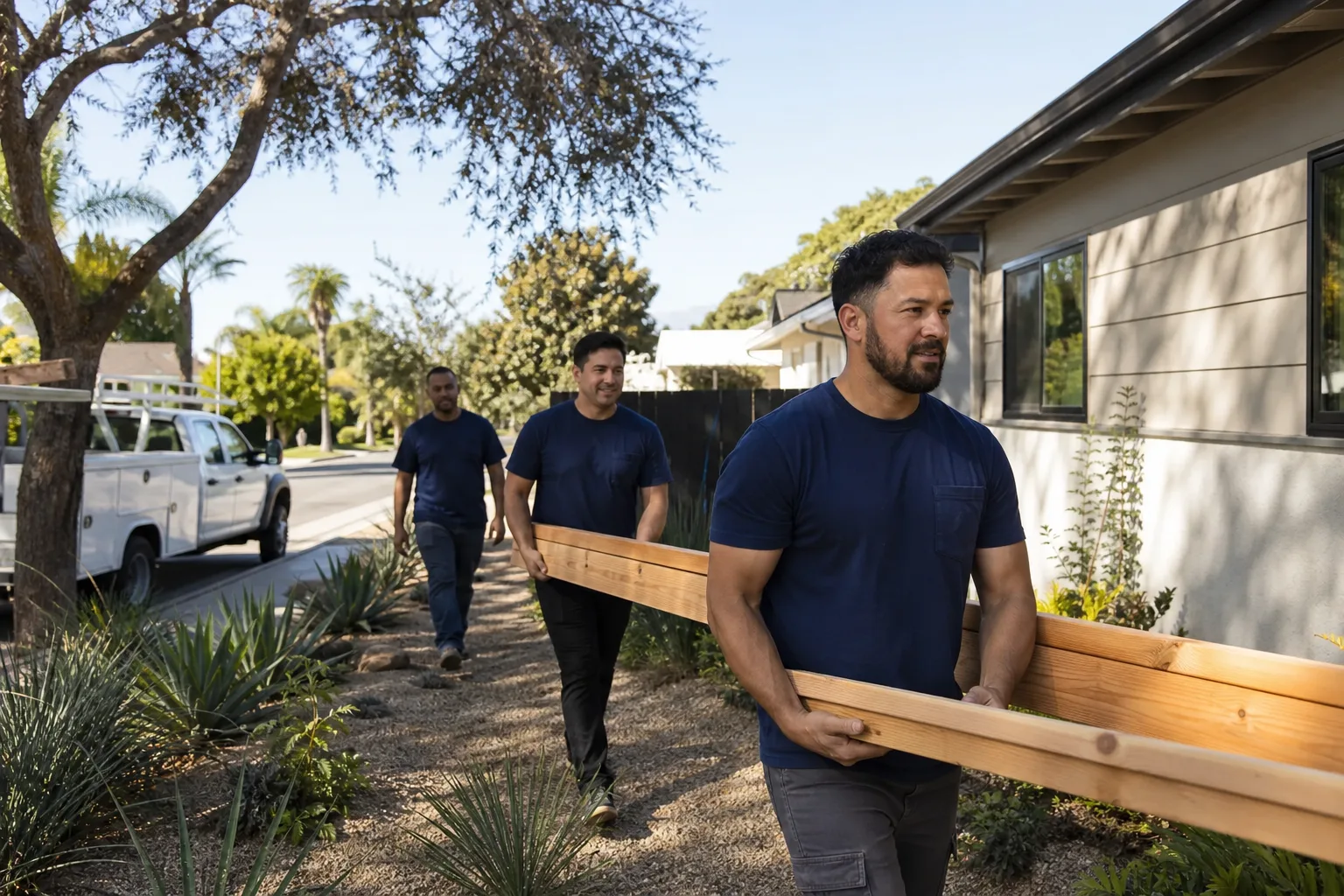
Here’s a question almost no homeowner asks and every homeowner should: who physically comes to my property, and how do I know who they are before they arrive? A licensed contractor can subcontract the framing, electrical, plumbing, and finish work to a chain of crews you’ve never met. Opening your property to a rotating cast of unfamiliar tradespeople is a real thing to plan for, especially if you’re often home alone, have young children, or are older and value knowing who’s on your lot.
At Sutton ADU Builders, we built the Threshold Standard around that concern. Every field technician is background-checked and identity-verified, arrives in a clean marked uniform, and shows a photo ID badge at the door. Their name and photo are sent to you before the visit. That’s the baseline you should ask any contractor to match, and it’s the standard we operate by as the ADU-specialist member of the Threshold Group family. When you vet a Summerlin ADU contractor, ask these questions and listen for whether the answer is a system or a shrug:
- Are the people who show up employees or subcontractors, and are subcontractors vetted the same way?
- Will I receive the name and photo of each person scheduled for my property before arrival?
- How are tradespeople identity-verified and background-checked, and how often?
- What’s the process if an unfamiliar person shows up without a badge?
If the answer is “our guys are professionals,” ask again in plain terms. A real crew-vetting standard has a name, a checklist, and someone who can recite it.
Summerlin HOA Rules That Sink ADU Projects
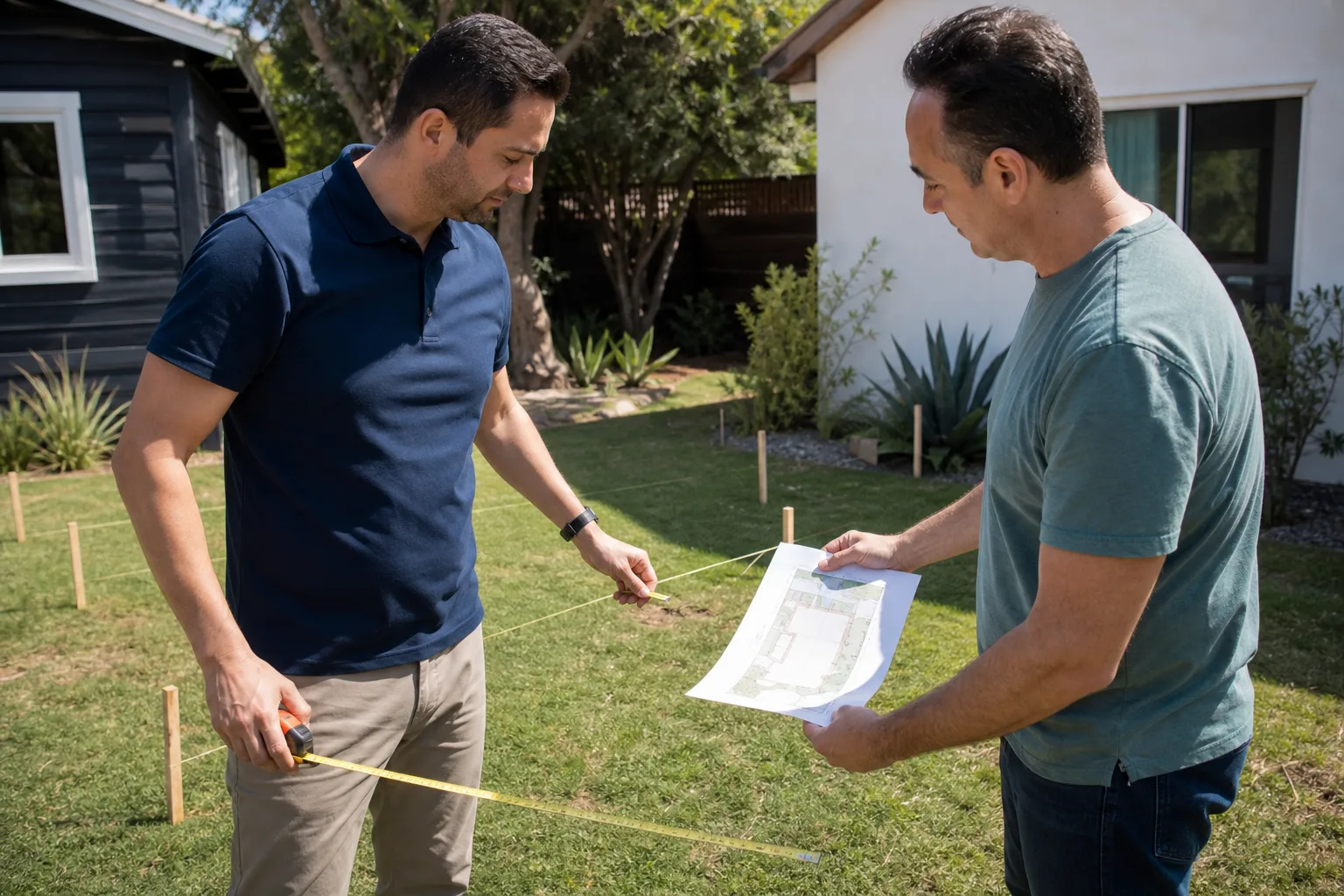
Summerlin is a master-planned community, which means almost every property sits under an HOA with architectural review. That’s the single biggest local trap in the ADU process, and it’s the one most often glossed over. A contractor who says “we’ll handle the HOA” without producing an architectural application and a written approval before breaking ground is a contractor who hasn’t done this work in Summerlin enough times to know how the reviews run.
The order matters: architectural approval first, then permits, then build. Some HOAs cap the square footage or placement of an accessory structure, and a detached ADU or a Room Addition Contractor in Summerlin project can cross several review steps. Setbacks (the required gap between your new structure and your property line) are set by both local code and association rules, and they don’t always agree. A contractor who builds first and asks forgiveness later is putting the cost of that gamble on you.
Ask any Summerlin ADU contractor for two things before you sign: a written statement of who’s submitting the architectural application and when, and evidence they’ve shepherded a comparable project through a Summerlin HOA review. “We’ve done this plenty of times” isn’t evidence. A name, a timeline, and a package checklist are.
What an ADU Really Costs in Summerlin
Owners deserve a real dollar range before they commit, so here’s a practical picture of what an ADU project runs in this market. These are ranges, not a quote, and your exact number depends on lot, size, and finish level.
- Detached ADU, garage conversion or new build, in the 600 – 1,000 sq ft range: most land between $150,000 and $320,000 before site work.
- Site work (utilities, grading, foundation tie-in, driveway): often adds $20,000 to $60,000 on a detached structure.
- HOA and permit fees: vary by association and plan review; budget a few thousand to plan for it, and confirm the actual number in writing.
- Prefab and modular product lines (Abodu, Dvele, Cover, Mighty Buildings, Plant Prefab, Boxabl): the shell is a fixed-price product, but site work and hookups still vary and still need to be quoted.
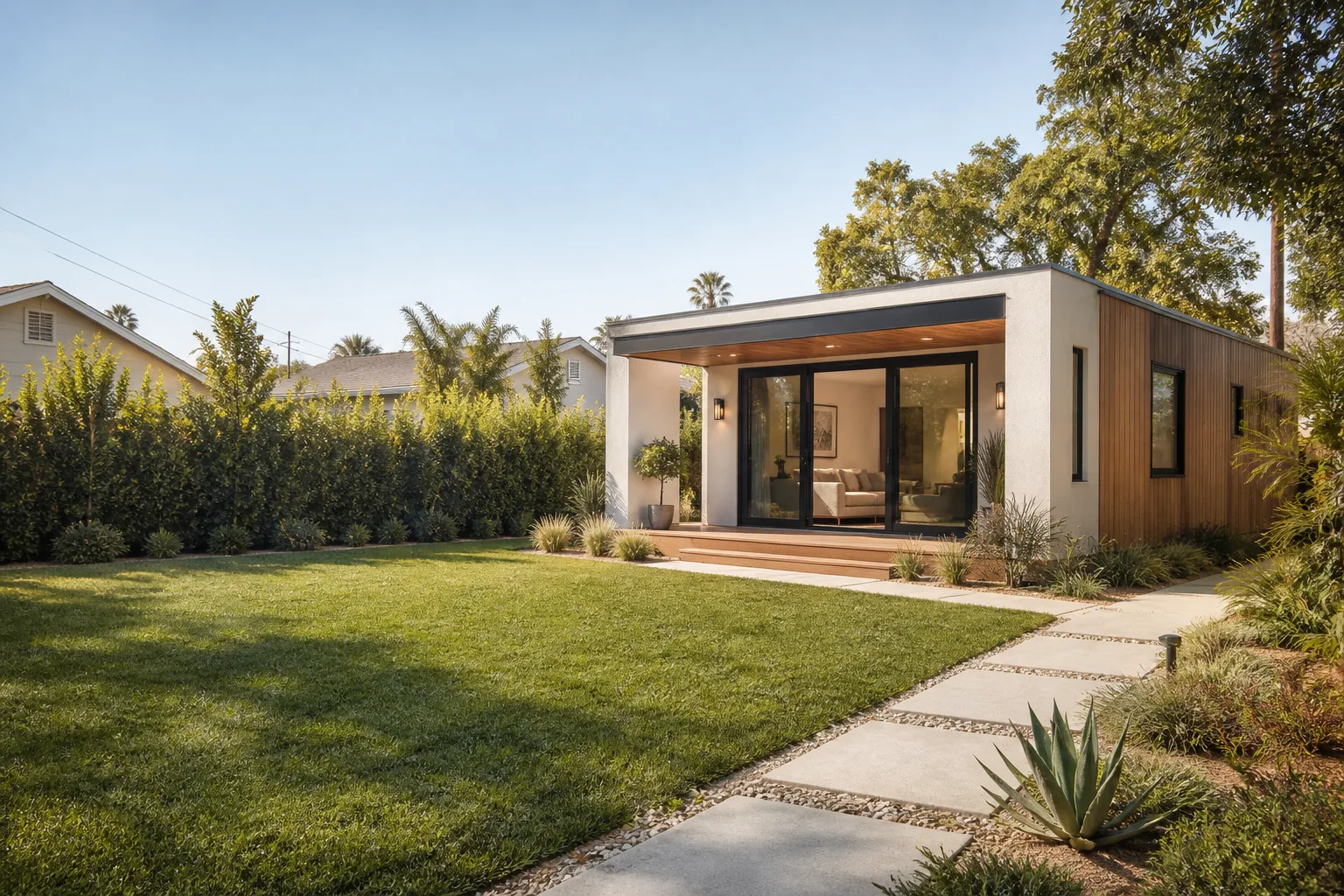
Where the price runs away is not the shell. It’s the allowances. A quote with uncapped allowances can drift past the upper end of that range without anyone breaking the letter of the contract. A fixed-price quote with capped allowances turns that range into a number you can plan around. That’s why we deliver a written price before any work begins and treat it as the number, not a suggestion. If you want to compare a prefab shell against a stick-built addition, the honest conversation lives with a Home Addition Contractor in Summerlin who’s run both, and a James Hardie-clad exterior is often the piece that makes a detached ADU look like it belongs on the lot.
The Seven-Question Interview Script
Use these seven questions in your first conversation. Each is designed so the wrong answer ends the conversation, and the right answer tells you exactly what you’re getting.
- Is your quote a fixed price, and if not, what is the maximum amount I can be billed above the quoted number?
- Which line items are allowances, and are they capped?
- Who submits the architectural application to my HOA, and can I see the checklist you use?
- Who physically shows up to my property, and will I get their name and photo before arrival?
- What does your workmanship warranty cover, and for how long, in writing?
- What’s your change-order process, and do I approve changes in writing before the work happens?
- How do payments tie to milestones, and what’s the deposit?
The wrong answers are recognizable: “don’t worry about it,” “we’ll figure that out as we go,” “our standard practice” with no document to show. The right answers come with a document you can read. Read every page of our Sutton ADU Builders Summerlin home if you want to see how we describe the same standard before you call.
Common Mistakes to Avoid
- Choosing on the bottom-line number instead of the clauses. The lowest of three quotes is often the one with the most uncapped allowances, and the final invoice is where that shows up.
- Letting the contractor “handle the HOA” verbally. Get architectural approval in writing before any ground is broken; a Summerlin HOA review is a real step, not a formality.
- Skipping the NSCB license check. Ten minutes on the public portal beats a phone call and a handshake every time.
- Never asking who physically comes to the property. A contractor whose tradespeople are vetted and photo-badged is a different transaction from one who sends whoever’s available.
- Signing a cost-plus contract without realizing it. If the document says percentage markup and you assumed fixed price, the assumption, not the contract, is what’s wrong.
- Believing a verbal warranty. A workmanship warranty has a term and a scope or it isn’t a warranty. Ours is a named, written guarantee: the 365-Day Done Right Promise covers defects in workmanship for one full calendar year from completion, and if an element fails, a free second visit is included.
- Paying a large cash deposit up front. Milestone-based payments keep leverage where it belongs, which is with you.
When to Call a Professional
Bring in a professional contractor at the start, before you’ve settled on a design or a product line, because the answers to “can this go here” and “what will it actually cost” depend on details you can’t eyeball. If you’re weighing a detached ADU against a garage conversion, an addition against a prefab shell, or a single-story room addition against a two-story bump-out, an experienced contractor can flag the site, setback, and HOA constraints that change the whole plan. Our technicians have up to 20 years of experience across ADU and addition work, and we treat the early conversation as the place to give straight answers rather than a pitch. You don’t need to have a design. You need a real number. Sutton ADU Builders Summerlin offers free estimates in Summerlin; call (833) 355-2818 to schedule yours.
Frequently Asked Questions
Most detached ADUs in the 600 – 1,000 sq ft range in Summerlin run $150,000 to $320,000 before site work, with site work often adding $20,000 to $60,000. The range depends on lot, size, finish level, and whether you build stick-built or install a prefab shell from a maker like Abodu, Dvele, or Cover. The more important question is whether your quote is fixed-price with capped allowances, because that’s what turns the range into a number you can plan around. Call (833) 355-2818 for an exact quote on your lot; estimates are free.
In most cases, yes. Summerlin is largely master-planned, and an ADU or addition typically requires architectural review before any construction begins. Get the approval in writing before breaking ground, and confirm who’s submitting the application on your behalf. A contractor who says they’ll handle it without showing you the review package or a timeline is glossing over the step that most often stalls a project. Ask for the checklist.
Use the Nevada State Contractors Board (NSCB) public database and search the contractor’s legal business name. Confirm the license is active, the classification covers residential work, the bond amount is current, and read any complaint history. It takes about ten minutes and tells you more than the first meeting will. If the name on the portal doesn’t match the name on your contract, ask why before you sign anything.
An estimate is a prediction; a fixed-price quote is a commitment. A fixed-price quote locks in the number even if the job runs long, and it usually caps or eliminates allowances. An allowance-based estimate can change once work begins because it’s a placeholder, not a promise. Read the clause that says “fixed price” or “not to exceed,” and read the allowance section, before you compare bottom lines.
A fixed-price contract with capped allowances shouldn’t move unless you approve a change order. A cost-plus contract can move every time the job does, and an allowance-based estimate can move when an allowance runs out. Our standard is a written price before work begins, with no surprise invoices and no scope creep passed silently to the bill. If a contractor can’t tell you how price changes are controlled, that’s your answer.
Crew vetting means the people who show up to your property are background-checked, identity-verified, uniformed, and photo-badged, and that you receive their name and photo before arrival. It matters because opening your property to a rotating cast of unfamiliar tradespeople is a real concern, especially for homeowners who are often home alone or have young kids. At Sutton, this is the Threshold Standard, named and applied on every project. Ask any contractor to describe their system, not just their attitude.
The Bottom Line
Hiring an ADU contractor in Summerlin comes down to what’s inside the document, not what’s at the bottom of it. Verify the license through the NSCB, check that the quote is genuinely fixed-price with capped allowances, confirm the HOA architectural review is in writing before ground breaks, and ask who physically shows up and how you’ll know them. The gap between a real contract and a vague estimate is where most budget overruns are born. Read the clauses, then compare numbers. If you’d rather start with a straight answer on your lot and a written price, call (833) 355-2818 to schedule your free estimate. Our team walks Summerlin homeowners through the same checks we’d want on our own property, and we answer the phone whenever you call, day or night. Read more about how we build on our home page and see the full Summerlin ADU guide.
Written by the team at Sutton ADU Builders Summerlin.