Last updated November 17, 2026
ADU Warning Signs: A Summerlin Homeowner’s Reference Guide
A hairline stucco crack on an ADU exterior in Summerlin is almost never a structural emergency. But a horizontal crack at a window corner that grew more than an eighth of an inch between June and September is a different conversation entirely. That gap between “watch it” and “call today” is where most homeowners get lost, because the internet is full of warning-sign lists that never tell you which ones actually matter. This guide connects each symptom to its likely cause in Summerlin’s desert climate, separates contractor error from normal aging, and ranks every sign by urgency so you know exactly what to do next.
Quick Answer
Most ADU problems in Summerlin fall into three buckets: cosmetic wear from thermal cycling, workmanship failures that show up in the first year, and code-level issues hiding behind walls. Cosmetic cracks and faded paint are watch-and-wait. Horizontal cracks that widen across seasons, efflorescence that keeps returning after cleaning, roof coating bubbles, and any electrical or plumbing symptom without a visible cause are call-today signs. The single most useful habit you can build is photographing and dating every change so you can prove what happened and when.
Table of Contents
- The Severity-Ranked Symptom Index
- Desert-Specific Failure Patterns in Summerlin
- Workmanship vs. Material vs. Normal Aging
- Electrical and Plumbing Signs You Can’t See
- The Documentation Habit That Protects You
- How Summerlin’s Climate and Soil Drive Wear
- A Seasonal Walkthrough Checklist
- Common Mistakes to Avoid
The Severity-Ranked Symptom Index
Not every sign on your ADU means the same thing, and treating them all as emergencies makes you easy to upsell. Here’s how we rank what we actually see on Summerlin properties, from “note it and move on” to “stop what you’re doing and call.”
Watch and wait (note it, photograph it, check monthly):
- Hairline stucco cracks under a sixteenth of an inch, especially spiderweb patterns in the field of a wall
- Faded paint or chalky residue on the sunny south and west walls
- Minor hairline separation where trim meets stucco
- Dust streaks below window frames after a wind event
Investigate within a week (measured, documented, scheduled):
- Cracks between a sixteenth and an eighth of an inch, or any crack that reappears after patching
- Efflorescence (the white powdery staining) that returns after a hose-down
- Roof coating that looks dull but isn’t bubbling or peeling
- Mild expansion joint separation at the slab or wall transitions
Call today (urgent, potential structural or safety):
- Any horizontal crack that grew noticeably across a summer season, particularly at a window or door corner
- Stucco that sounds hollow or has visibly detached from the substrate
- Roof coating bubbles, blisters, or areas that stay wet after rain
- Water staining on interior ceilings or walls, or a musty smell you can’t trace
- Warm outlets, a breaker that trips repeatedly, or a burning smell near any panel
- Unexplained increases in your water bill with no visible leak
The reason we sort them this way: in our experience, the sign itself tells you less than the pattern and the rate of change. A crack that’s been the same since you first noticed it is a different animal from one that’s actively moving. For a full picture of what we build and how we handle warranty questions, see our ADU Builders in Summerlin page.
Desert-Specific Failure Patterns in Summerlin
Summerlin’s climate is genuinely hard on buildings in ways that guides written for wet climates completely miss. Daytime highs of 105°F and overnight lows that can drop 30 degrees create what’s called thermal cycling (the repeated expansion and contraction of materials as temperature swings). Over a single summer, a stucco wall can expand and contract hundreds of times. Here are the failure patterns that show up most in Summerlin specifically.
Efflorescence on stucco. That white, chalky bloom on the surface is salt migrating out of the concrete or stucco as moisture moves through it. In wet climates it means a water intrusion problem. In Summerlin it’s often triggered by irrigation overspray hitting the wall, poor drainage at the base, or a small roof leak that’s feeding the wall from above. If it comes back after you clean it, something is actively wetting the wall.
Roof coating bubbling. Flat and low-slope ADU roofs are typically protected by a reflective elastomeric coating. In desert sun, coatings fail from the top down. Bubbles and blisters mean the coating has lost adhesion and water is now trapped underneath, which accelerates the failure. This is one of the more urgent signs because the underlying roof deck can take on moisture before you notice an interior stain.
Expansion joint separation. Good construction includes expansion joints (intentional gaps at wall and slab transitions) that allow movement without cracking the structure. When those joints widen beyond their design, or the sealant pulls away, you’re seeing thermal movement working against you. Joint sealant in Summerlin typically needs attention long before it does in milder climates.
UV chalking and sun-facing wear. The west and south walls of an ADU take the most direct afternoon sun. Paint chalks, sealants harden and crack, and any wood trim weathers first on those faces. This is normal aging, not a defect, and it’s a maintenance item rather than a warranty claim. Whether the cladding is James Hardie fiber cement or a prefab panel system like you’d see on a Dvele or Cover unit, the sun-facing side always fails first.
Workmanship vs. Material vs. Normal Aging
The single most important skill for a Summerlin ADU owner is telling these three apart, because the answer determines who pays and who’s responsible. Get it wrong and you either let a real defect slide past your warranty or you blame normal wear for something a builder should fix.
- Workmanship failure shows up early, usually within the first year, and in patterns. A single crack is a material story. A row of cracks along a control joint that was never cut properly is a workmanship story. Water intrusion at a window corner points to flashing that was installed wrong, not the flashing itself.
- Material failure also shows up quickly but is isolated and repeatable across different locations. A batch of coating that blisters on every roof face. A prefab panel with a bonding defect. Material failures usually have a paper trail and the manufacturer often covers them.
- Normal aging is gradual, cosmetic at first, and appears all over the structure rather than in one place. Sun-facing chalking, thin cracks in stucco after a decade of thermal cycling, and worn sealant are all normal. Nobody owes you a repair for the desert being hot.
The practical rule: if a problem shows up in one specific spot right after construction and follows a pattern, it’s likely workmanship and belongs on a warranty claim. If it appears all over, gradually, it’s aging. If it’s identical across multiple units or brands, it’s material. Documenting the “where and when” is what lets you argue the difference clearly. Our Home Addition Contractor in Summerlin page explains how a written price and a named workmanship guarantee protect you here, because the guarantee only matters if you can prove what went wrong and when.
Electrical and Plumbing Signs You Can’t See
The most dangerous ADU problems are the ones that never trip a breaker or drip onto your floor. Electrical and plumbing issues in a second dwelling can sit quietly for months and then cost five figures to fix. Here’s what to watch for.
Electrical warning signs that don’t trip a breaker:
- Outlets or switch plates that feel warm to the touch (this is a connection issue, not normal)
- A faint burning smell or discoloration near any outlet or panel, which signals arcing behind the wall
- Lights that flicker consistently when a specific appliance runs, which often means an undersized or loose circuit
- A breaker that trips repeatedly, especially the same one, which is a real problem and not something to reset and forget
- An ADU panel that isn’t labeled, or that was added after the main build without a permit
We want to be direct here: panel work and anything behind a wall is genuinely dangerous. Don’t open a panel or poke at wiring yourself. Most of what we’re describing requires a licensed electrician to diagnose safely, and the cost of a diagnostic visit is nothing compared to the risk of a fire.
Plumbing warning signs without a visible leak:
- A water bill that rises with no change in habits, which usually means a slow leak under a slab or in a wall
- A musty smell in the ADU that doesn’t clear with ventilation
- Water pressure that dropped gradually across the whole unit
- Any soft spot in drywall, baseboard, or flooring near a bathroom or kitchen
Plumbing supply lines and drain joints don’t fail loudly. They seep, and in a desert climate the moisture often evaporates before it stains, which is why homeowners miss it. If you smell something you can’t place, don’t wait for the stain. A room addition or conversion has all the same plumbing risk as a main house with one important difference: it’s often unoccupied, so a slow leak can run for weeks. Our Room Addition Contractor in Summerlin page covers how we handle rough-in and inspections to reduce this risk.
The Documentation Habit That Protects You
If a problem ever turns into a warranty dispute, the winner is almost never the person with the best argument. It’s the person with the best record. A single dated photo taken the day you noticed a crack is worth more than a year of memory. Here’s the habit we recommend to every Summerlin homeowner, and it takes less than ten minutes a month.
- Pick a fixed date. The first Saturday of every month, walk the ADU exterior and interior with your phone. Same route, same angles, same lighting where possible.
- Photograph wide, then close. Take one shot showing where the feature is in relation to the whole wall or room, then a close-up with a ruler or coin for scale. The wide shot is what proves the location.
- Date every photo. Your phone does this automatically, but back the images up somewhere off the phone. If the device is lost, so is your evidence.
- Write one sentence per problem. “Horizontal crack at northwest window, grew from hairline to about 1/8 inch between June and September.” That sentence is what turns a complaint into a claim.
- Keep the paper trail together. Your written price, any change orders, inspection records, and the warranty document belong in one folder. The 365-Day Done Right Promise only works if you can find it and read it.
This applies to every construction project, not just ADUs, but it matters most for an ADU because the structure is exposed on all four sides and you’re the only one watching it. When something does go wrong, a clean record lets a good contractor make it right quickly instead of arguing about what was there before. That’s the whole point of a written guarantee, and it’s why we put everything in writing before a project starts.
How Summerlin’s Climate and Soil Drive Wear
Summerlin sits on the west edge of the Las Vegas Valley against the Spring Mountains, and that geography shapes how buildings fail here. The soil is expansive clay in many parts of the community, which means it swells when wet and shrinks when dry. During monsoon season, July and August rain can hit hard and fast after months of nothing, and that cycle moves foundations and slabs. This is where a lot of hairline cracks in garage slabs and ADU floors come from, and it’s why builders in Summerlin pay close attention to grading and drainage around a new structure.
The summer heat and the night cooling do the rest. Add in the dust and wind of spring, and you get a three-season pattern of movement: dry and contracting through spring, baking and expanding through summer, showered and swelling through monsoon, then cooling and contracting again in fall. An ADU in Summerlin goes through this cycle every year of its life. That’s why our recommendation is to look for rates of change, not individual marks. A wall that cracks and stays cracked is doing what it’s supposed to. A wall that cracks a little more each summer is telling you something.
This is also why cladding choice matters. James Hardie fiber cement handles this cycle far better than traditional stucco over wood framing because it’s engineered to move less. Prefab and modular units from brands we work with, including Abodu and Dvele, are built in controlled environments and then assembled on site, which changes the failure profile entirely. If your ADU is a site-built structure, expect more maintenance. If it’s prefab, expect the joints and connections to be the watch points. Both are manageable, but you need to know which one you have.
A Seasonal Walkthrough Checklist
Here’s the checklist we hand to homeowners after a project wraps. It’s built for Summerlin’s four-season pattern, and it’s the same sequence our team runs on final inspections. Print it, keep it with your project folder, and work through it once a season.
- Spring (before the heat): Check all roof coating and flashing for winter wear. Confirm irrigation isn’t spraying stucco. Look at sealant around windows and doors. Test every ADU smoke and CO detector.
- Early summer (before the peak): Confirm the AC and any mini-split are serviced and draining properly. Verify roof coating reflects (any dulling now means it’ll be worse by August). Photograph every wall face for a baseline.
- Monsoon (July – August): After the first heavy rain, walk the exterior and look for new efflorescence or water staining. Check every interior ceiling and wall for new marks. Confirm gutters and downspouts move water away from the foundation.
- Fall (the key inspection): Re-photograph every wall and compare to the spring baseline. This is when you’ll catch thermal-cycle cracks that grew over the summer. Seal any expansion joints that have pulled away. Check the interior for the musty smell that signals a slow leak.
If at any point in this cycle you find something that’s moved, widened, or returned after cleaning, that’s when to call. We’d rather look at a photo of a crack in October than see a wall in April that’s had a season of water in it. For a broader look at how we plan and build in this climate, see the Sutton ADU Builders Summerlin home page.
Common Mistakes to Avoid
- Treating every crack as an emergency. Summerlin’s thermal cycling makes hairline stucco cracks near-universal on site-built structures. Panicking over a sixteenth-inch crack while missing a horizontal one that grew all summer is exactly backwards.
- Patching a crack before you document it. The patch hides the evidence. A photo with a coin for scale, dated, is what lets you argue a warranty claim later. Take the photo before the tube of caulk comes out.
- Washing off efflorescence without finding the source. White staining that keeps returning means moisture is actively moving through the wall. Cleaning the surface leaves the cause untouched and the problem growing.
- Assuming a quiet ADU is a healthy ADU. The unit is often unoccupied. A slow plumbing leak or a roof coating that’s been failing all summer won’t announce itself. Walk it on a schedule.
- Letting anyone reset the breaker and call it fixed. A breaker that trips repeatedly is a symptom, not a nuisance. A licensed electrician needs to diagnose it, and it’s a safety issue you shouldn’t defer.
- Not keeping the warranty and written price in one place. The 365-Day Done Right Promise covers workmanship for a full year from completion. If you can’t produce the document and the date, the guarantee is harder to invoke.
- Hiring a second contractor to “touch up” work that’s still under warranty. A third party touching the work can muddy who’s responsible. Call the original builder first and let them make it right.
When to Call a Professional
Call today if you see a horizontal crack that’s grown across a summer, stucco that sounds hollow, roof coating bubbles, interior water staining, a warm outlet, a breaker that keeps tripping, or a water bill that’s climbing without a visible cause. Don’t put your hands inside a panel or open up a wall to investigate yourself. Some of these signs are cosmetic, but a few are genuinely dangerous, and a trained eye tells the difference in ten minutes. Schedule a call within a week for returning efflorescence, expansion-joint separation, and any crack that reappears after patching. Watch-and-wait applies to hairline field cracks, sun-facing chalk, and minor trim separation. Sutton ADU Builders Summerlin offers free estimates in Summerlin, with a written price before any work starts and the Threshold Standard protecting the visit. Call (833) 355-2818.
Frequently Asked Questions
Size and rate of change matter more than the crack itself. Hairline cracks under a sixteenth of an inch are usually normal thermal movement in the desert. A horizontal crack at a window or door corner that grew more than an eighth of an inch between June and September, or any crack that reappears after patching, needs an in-person look. Call (833) 355-2818 for a free estimate and we’ll tell you honestly which bucket it’s in.
That’s efflorescence, and it returns because moisture is still moving through the wall. Common causes in Summerlin are irrigation overspray, poor drainage at the base, and small roof leaks that wet the wall from above. Cleaning the surface without finding the source just resets the clock. Call (833) 355-2818 and we’ll trace it back to the cause instead of washing the symptom.
Bubbling is real. On a flat or low-slope ADU roof in Summerlin, a bubble means the coating has lost adhesion and water is trapped underneath, which degrades the roof deck before you see an interior stain. It’s one of the watch-today signs rather than a wait-and-see. Call (833) 355-2818 for a free inspection before the next monsoon.
Pattern, timing, and location decide it. Workmanship failures show up early and usually follow a pattern in one spot. Normal aging is gradual, cosmetic, and spread across the whole structure. Material failures tend to repeat identically. Documenting what changed and when is what lets you make the case for a workmanship warranty claim. Call (833) 355-2818 to discuss what you’re seeing.
Warm outlet or switch plates, a faint burning smell, discoloration around an outlet, and lights that flicker consistently when a specific appliance runs. None of these trip a breaker reliably, and all of them indicate a real connection or arcing problem behind the wall. Do not open the panel yourself. Call (833) 355-2818 and we’ll bring in the right licensed trade.
Not with us. Every homeowner gets a written price before any work begins, so the number you agree to is the number you pay. There are no surprise invoices and no scope creep passed silently to the bill. The 365-Day Done Right Promise then covers defects in workmanship for a full calendar year from completion, and a free second visit is included if any element fails. Call (833) 355-2818 for a free estimate.
The Bottom Line
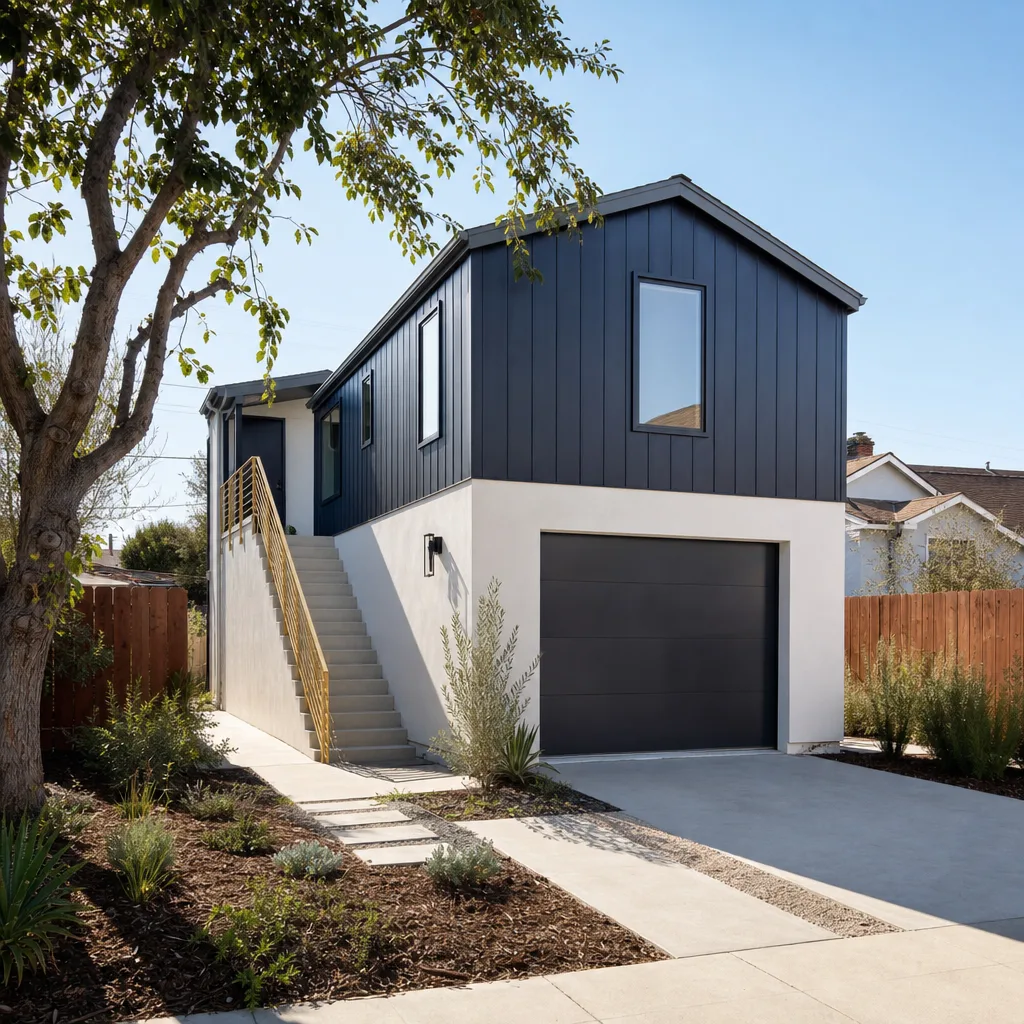
The worst approach to ADU problems in Summerlin is treating every sign the same. Cosmetic cracks and sun-facing wear are the desert doing its thing. Horizontal cracks that widen across a summer, efflorescence that keeps returning, roof coating bubbles, and hidden electrical or plumbing symptoms are genuine calls. Learn to tell workmanship failure from material failure from normal aging, because that difference decides who’s responsible and who pays. And build the documentation habit now, before you need it. Dated photos and a clean paper trail turn a warranty dispute into a five-minute conversation. That’s what a written guarantee and a written price are for.
Sutton ADU Builders Summerlin is the ADU-specialist member of the Threshold Group family, and every project runs under the Threshold Standard: a written price before work begins, a 365-Day Done Right Promise covering workmanship, and a free second visit if any element fails. Our technicians have up to 20 years of experience, and every field tech is background-checked, identity-verified, uniformed, and photo-badged, with their name and photo sent to you before they arrive. We work with leading ADU product lines including Abodu, Cover, Dvele, and Mighty Buildings, plus Tuff Shed conversions and James Hardie exterior systems, so we can give you honest guidance on what fits your lot and budget. Call (833) 355-2818 for a free estimate.
Written by the team at Sutton ADU Builders Summerlin.